New RV Inspection Checklist: Should You Hire an Inspector?
By Bree Calloway · October 29, 2026
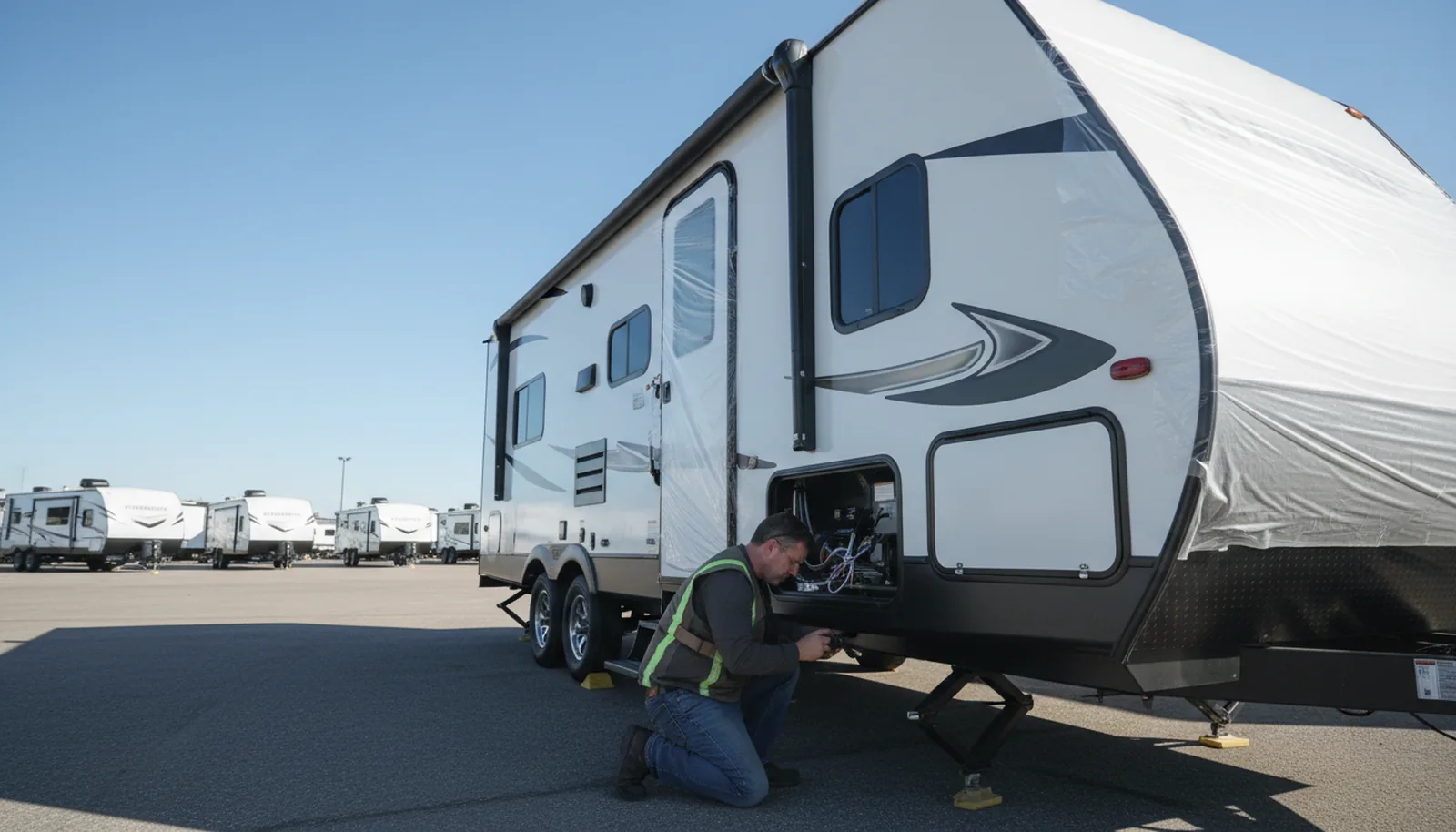
The day my coworker Dana picked up her new travel trailer, I met her at the dealer lot in a downpour with a new RV inspection checklist in hand, just like the ones used for RV inspection in Fort Pierce. Certified RV inspectors in Port St Lucie had already found hidden defects in similar units, and I wasn’t letting her sign anything without an independent set of eyes. I learned that lesson the hard way with my fifth wheel, the one I bought without an inspection and sold two years later at a loss because of water damage nobody told me about. So I’d booked an RV inspection in Bushnell for Dana’s trailer. Then we added a second appointment for an RV inspection in Fort Pierce at the dealer’s request. Within the first hour, the inspector found a leaking water line behind the kitchen cabinet. Same thing had happened on a unit the week before, found by an RV inspection in Orlando. A brand-new rig, straight from the factory. I handed Dana a copy of the new RV inspection checklist we’d put together, and she wrote the leak on it befor we even talked to the dealer.
New RVs roll off the line with the same problems as any complex machine, then get bounced across the country on a transport trailer. A dealer’s walk-through shows you how the awning works; an independent inspector shows you what’s already broken. If you’re buying in Florida, pre-purchase RV inspectors nationwide are simple to book, and they’ll meet you at the lot before you accept the unit.
Why a brand-new RV needs an independent inspection
Factory defects show up as sealant gaps, loose wiring, plumbing that never got pressure-tested, appliances that fail the first time you use them. Manufacturers build these things fast. Dealers do a prep that mostly means washing it and plugging it in. The trip from Indiana to Florida shakes things loose too. A 2021 NRVIA survey found that 41% of member inspections was on new dealer-owned RVs. Of those, 20% had life-safety issues and 35% had major issues.
An independent inspector works for you. Not the dealer. They spend four to eight hours testing and photographing every system. They can’t repair anything, so there’s no reason for them to invent problems or hide them. The report becomes your written list of defects to fix before you sign the final acceptance, and that list carries weight in a warranty claim.
For motorhome buyers, motorhome inspection in Clearwater is a search peopel make often, and inspectors there regularly find slide-out leaks and bad generator wiring on brand-new coaches.
What a new RV inspection checklist includes that the dealer walk-through doesn’t
A dealer orientation is a sales pitch. A certified inspector’s checklist is about function and safety, and our RV inspection checklist: the 15 systems goes through each one. Most independant inspectors follow the NRVIA Standards of Practice. Here’s what gets tested.
- Roof: seams, sealant condition, vents, skylights, any ripples in the membrane.
- Electrical: 120-volt polarity, GFCI operation, hot-skin test for stray voltage.
- Propane: leak-down test at 8 inches of water column for 5 minutes, plus regulator pressure.
- Plumbing: city water connection, water pump pressure and hold, drain function.
- Tires: DOT date codes checked against age guidance.
- Slide-outs: operation, seal condition, water intrusion evidence.
An inspector shows up with a moisture meter, infrared thermometer, manometer and electrical testers. They know where to look. The dealer’s tech may not have opened the converter panel or checked the water heater anode rod.
I keep a printable RV inspection checklist in my own rig for pre-trip walk-arounds, but a new unit needs a professional’s version.
I watched this video and it broke down the arguments for inspecting a new RV better than I could.
What you can check yourself vs what the inspector adds vs what the warranty covers
The warranty only covers what you can document as a defect in materials or workmanship, and some things you can see with a flashlight while others need a trained eye and tools you don’t own.
| Check | You can do | Inspector adds | Warranty covers |
|---|---|---|---|
| Visual roof sealant gaps | Yes, look for cracks | Pinpoints where moisture has already gotten in | Usually yes, if sealant failed |
| LP leak test | No, needs manometer | Standard part of inspection | Yes, if a fitting or hose is defective |
| Hot-skin voltage | No, needs multimeter and knowledge | Standard part of inspection | Yes, if faulty wiring |
| Water pump pressure | No, needs pressure gauge | Standard part of inspection | Yes, if pump is defective |
| Slide operation | Yes, run it in and out | Assesses seal alignment and leaks | Yes, if mechanical defect |
| Tire date codes | Yes, read the DOT number | Interprets age guidance for your rig | Not covered as normal wear |
A written inspection report is your best evidence when the dealer tells you “that’s normal” or the manufacturer says “not covered.” I’ve seen a friend get a full roof replacement approved because the inspector’s photos showed improper sealant from the factory.
What an independent inspection costs for a new RV, and when it’s not worth it
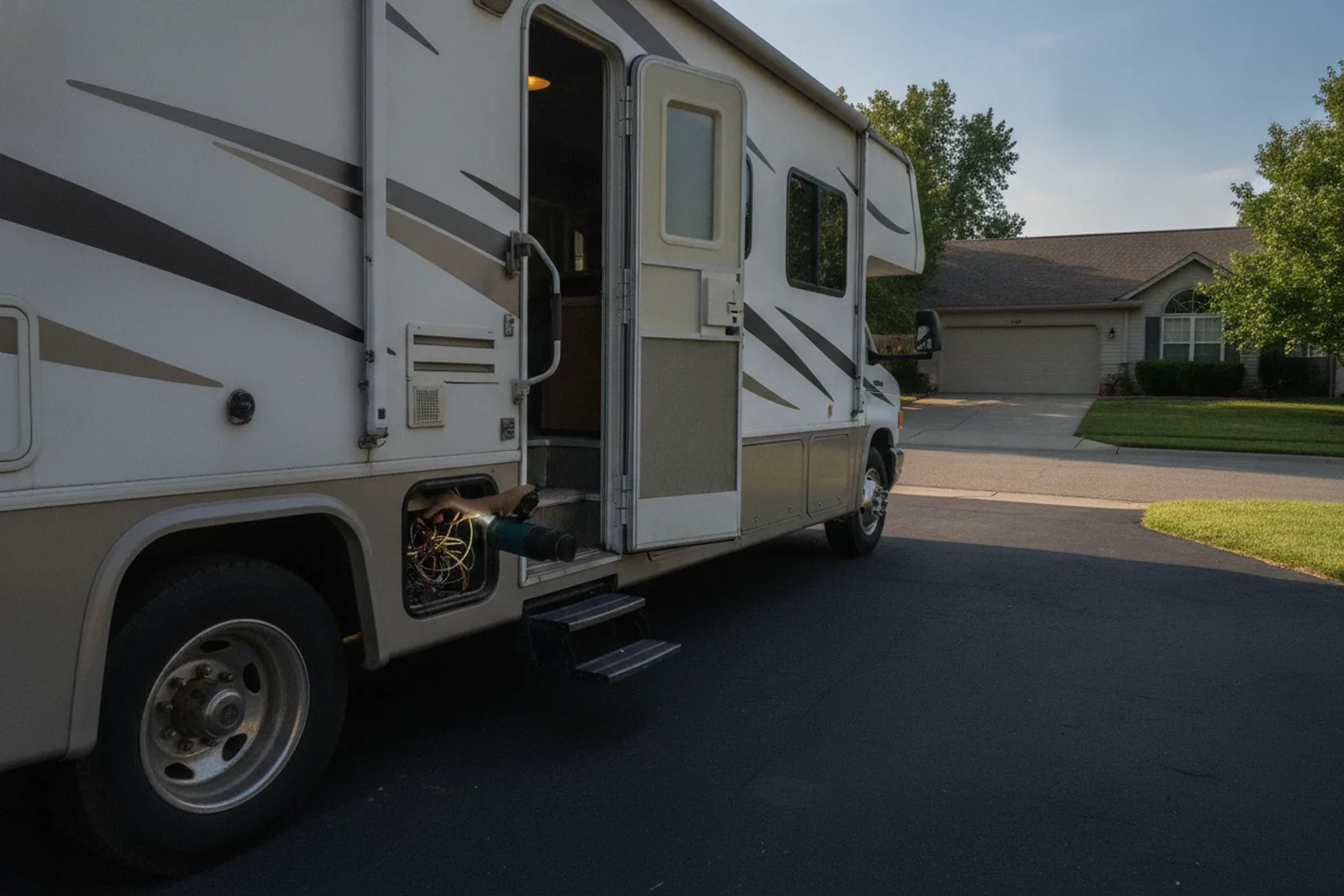
Prices depend on the inspector, where you are, what you’re buying, and how deep they go. A new travel trailer under 25 feet might run $350 to $450. A fifth wheel runs $450 to $700. A Class C motorhome is $450 to $900. That’s a fraction of a $40,000 or $100,000 purchase.
You might skip the inspection on a new unit if you trust the dealer and you don’t mind scheduling warranty repairs in year one. But think about it: you’ll be the one calling for appointments, waiting on parts, and dropping the rig at the lot for weeks. I’d rather find the leak before I hand over the check.
Ask the inspector for a sample report and proof of insurance. Certified RV inspectors in Port St Lucie often post sample reports right on their websites.
How to time the inspection before you accept the RV
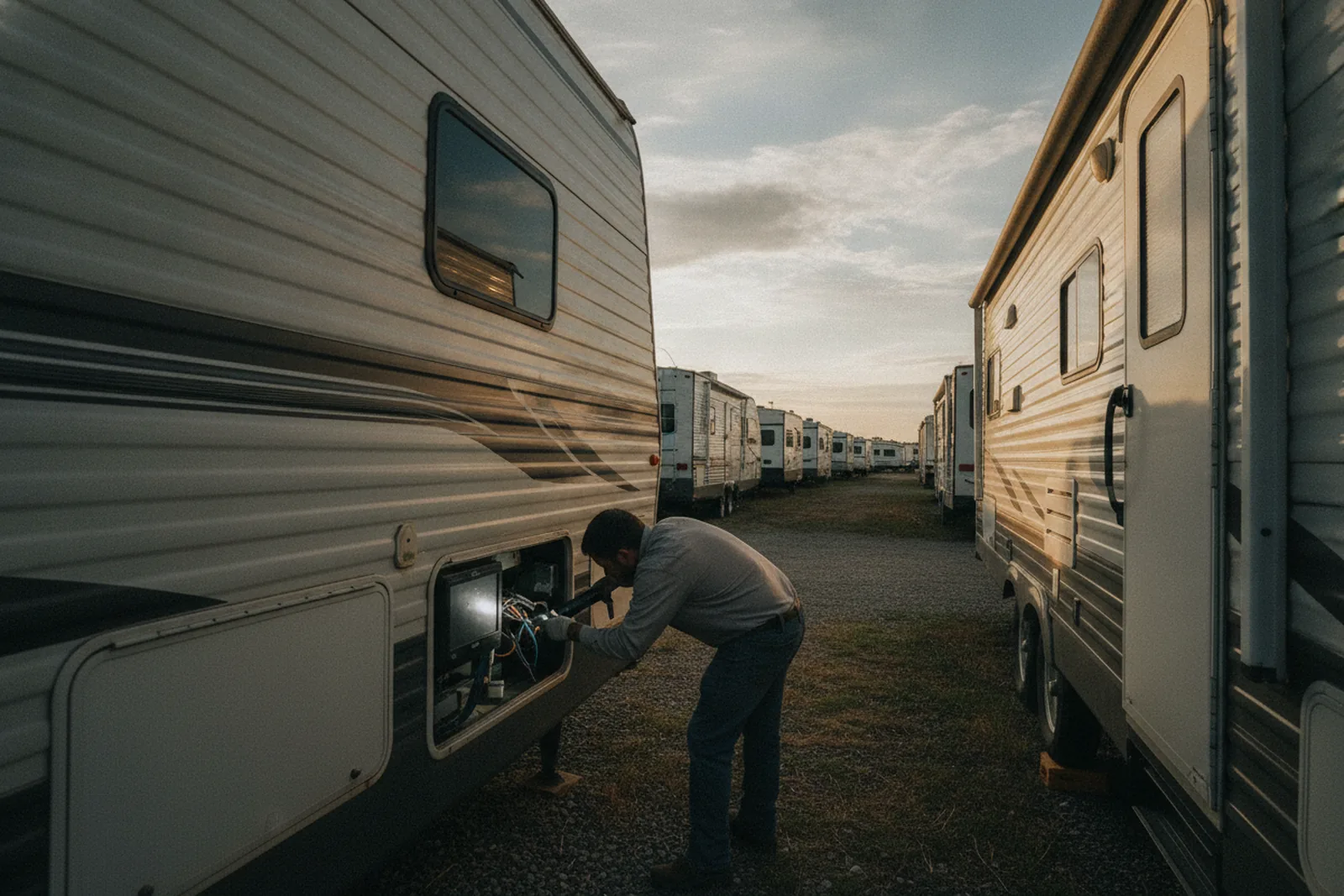
Make the sale contingent on an inspection. In writing. Put down a refundable deposit and get the inspector scheduled before the unit is prepped, not after. Most inspectors need the RV on shore power, with propane and water connected.
If the dealer balks at letting an outside inspector onto the lot, that’s a red flag. Some dealers restrict inspectors because of liability concerns, but you can ask for a compromise: the inspector does a shorter life-safety check on the lot and a full inspection after you take delivery, within the warranty period. Or you walk away.
Do not sign the final acceptance untill every finding is on a written repair list that the dealer signs. That list is your use. One buyer I know got the dealer to fix eight items before she’d accept the trailer, all found by the inspector.
In central Florida, RV inspection in Bushnell is a good option for buyers near the big dealerships along I-75.
Can a new RV fail an inspection? What happens next
An inspection isn’t pass/fail. The inspector documents what they find and tells you how serious each thing is. You decide what to do. Some findings are safety items that must be fixed before you drive off: propane leaks, hot-skin voltage, no brake lights. Others are warranty items: a misaligned slide, a cracked roof vent, a furnace that won’t light.
You have three options: ask the dealer to fix it before you accept, accept with a written due bill, or walk away. Most buyers don’t walk away. That NRVIA survey said buyers went ahead 90% of the time, often with the dealer agreeing to repairs. But the inspection gave them a clear list and negotiating power.
I know a couple who used an inspector’s report to get a $2,500 price reduction on a new travel trailer with a scratched exterior wall. The inspector’s photos and a written condition assessment made the difference.
If you’re near Orlando, RV inspection in Orlando covers the huge dealer lots there and the private sales around the theme park area.
What I’d tell a friend buying a new RV this week
Budget $500 for an independent inspection and schedual it before you sign anything. Read the inspector’s sample report first, so you know what to expect. And know that a new RV is not a Honda. It’s a house on wheels, built fast, and the warranty is only as good as your documentation.
If I could do one thing differently, I’d have hired an inspector for my fifth wheel before I bought it. The water damage I found later had been there since the factory, hidden under a slide floor. A moisture meter would have caught it in ten minutes.
Pull up pre-purchase RV inspectors near you and call two of them. Ask what their new RV inspection includes, how long it takes, and and what it costs for your rig. Ask if they’ve inspected that model before. Then book the one who answers fastest and sends a sample report.
Before you book an inspector
FAQ
How much does a new RV inspection cost?
A new RV inspection typically costs $350 to $900, depending on rig type and size. Travel trailers are cheapest; motorhomes cost more. Add-ons like fluid analysis run $200 to $300. Some inspectors charge travel fees beyond 25 to 50 miles. Always get a written quote before booking.
Should I get a new RV inspected before I buy it?
Yes. New RVs commonly have factory defects, transport damage, and dealer prep issues. An independent inspector finds problems like roof sealant gaps, loose wiring, and plumbing leaks that you wouldn't see on a dealer walk-through. The report gives you use to get repairs done or negotiate the price.
Can a dealer refuse to let me bring an outside inspector?
Some dealers restrict outside inspectors due to liability or time constraints on their lot. You can ask for a compromise, like a shorter life-safety inspection on the lot and a full inspection after delivery. If they refuse entirely, that's a red flag, and you may want to buy elsewhere.
What's the difference between a dealer PDI and an independent inspection?
A dealer PDI (pre-delivery inspection) is done by the dealer's own technicians to prep the unit for sale. An independent inspector works only for you, follows a detailed standards-based checklist, and has no financial interest in the outcome. The independent report is unbiased evidence for warranty claims.
What does an RV inspection report include?
A good report includes photos, detailed findings for evry system, severity ratings, and recommendations. It may be 20 to 100 pages long, typically delivered within 24 to 48 hours. Many inspectors provide a sample report on request so you know what to expect.
How long does an RV inspection take?
On-site inspection time ranges from 2 to 4 hours for a small travel trailer to 8 hours or more for a large motorhome. Report writing adds a few hours after the visit. Ask the inspector for an estimated time when you book.
What is the NRVIA and why does it matter?
The NRVIA (National RV Inspectors Association) certifies RV inspectors through training, exams, and continuing education. Certified inspectors follow a code of ethics that prohibits conflicts of interest and requires insurance. You can verify a credential through the NRVIA's inspector locator.
Find RV inspectors near you
Compare independent RV inspectors in your city, then ask a few for a price before you buy.
Browse by stateOr jump to: Fort Worth, TX · Port St. Lucie, FL · Defuniak Springs, FL