Do RVs need a state inspection? How the rules vary and what to check
By Ernie Takahashi · November 1, 2026
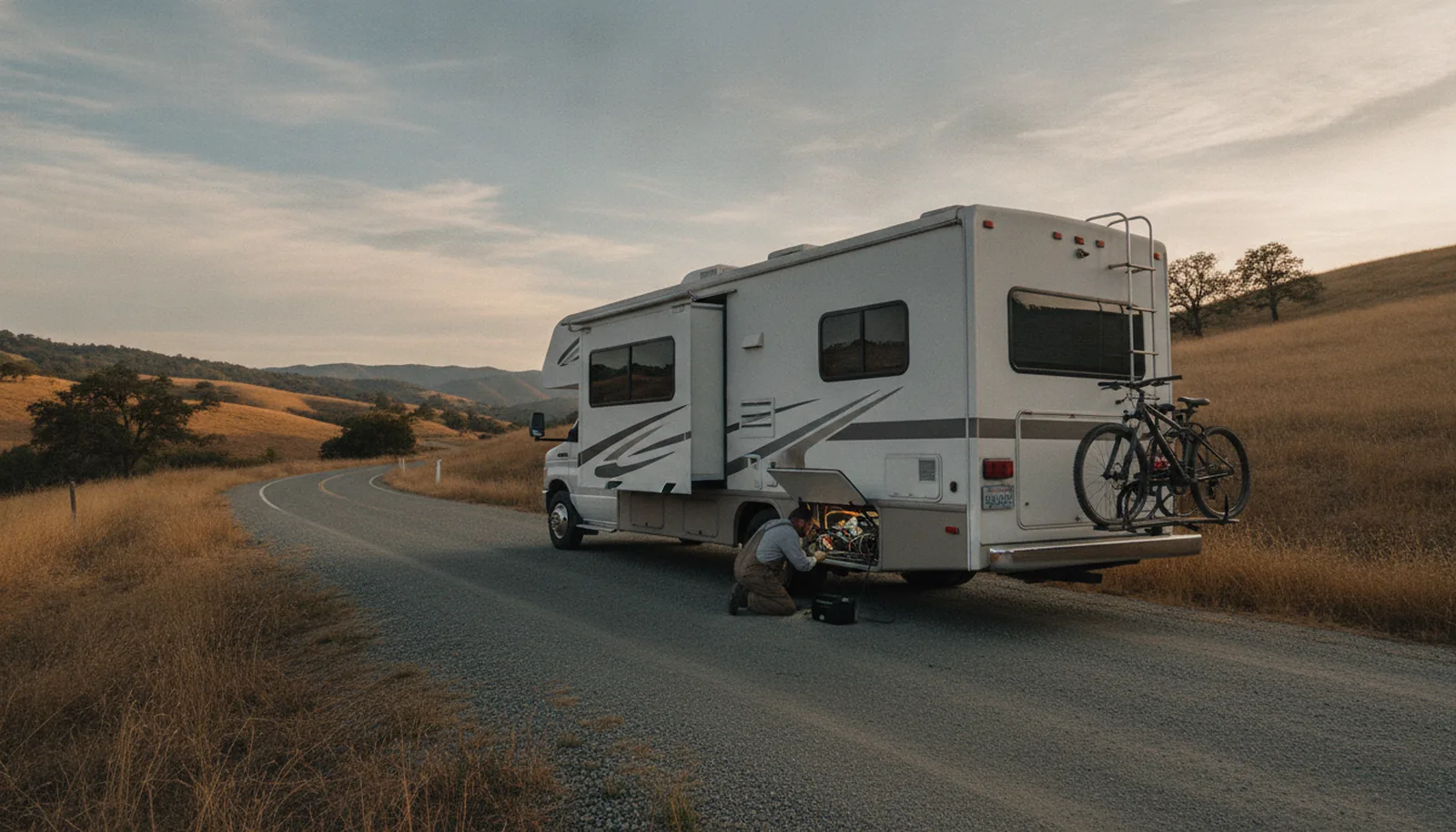
It was 104 in the Bakersfield yard when I watched a school bus inspector spend twenty minutes with a flashlight under a 1998 Blue Bird, then slap a sticker on it. Four months later that bus was still running, so I guess the sticker worked. The RV world is different, especially if you’re looking for RV inspectors in Las Vegas. I bought my 2012 gas Class A and the seller handed me the title and a handshake. That’s why you might want to look up RV inspectors in Nevada before you buy. No sticker, no state inspection, just a hope and a prayer. That’s the gap I want to close here. If you’re shopping in Nevada and need an RV inspection in Las Vegas, our team spends six hours on a rig, not six minutes. And that’s because state rules are so loose I had to learn to inspect my own motorhome like the state never would.
I call it the “sticker gap”: the distance between what the DMV checks, wich is almost nothing on an RV, and what actually fails.
RV state inspection: what it is and which states require one
A “state inspection” for an RV is a safety check some DMVs require before issuing registration or renewing tags, most often for motorhomes and trailers over a certain weight, and it will not look at the things that cost you money later. A screw driven thru a wire loom? No. An RV’s real failure points are hidden behind walls, under carpets, and up on the roof where the state never climbs. So a motorhome inspection in Las Vegas is the only way to catch them. If your state has no motorhome inspection, you are your own safety inspector. If it has one, it still won’t look at the things that cost you money later. That’s why I carry a moisture meter even when I’m just walking around someone’s motorhome for sale in a dealership lot, and I’d also suggest an RV propane inspection in Las Vegas for the gas system. A state sticker and six dollars in change have about the same diagnostic value, but certified RV inspectors are the ones who actually find the problems. Before you trust any rule I mention, call your DMV, and if you’re in Vegas, consider a mobile RV inspection in Las Vegas to cover what the DMV skips. Rules change by county, by weight, by year, and by how the clerk slept. It’s a mechanic’s warning.
What state inspections DO cover, on the rare chance your RV needs one
The rare state inspection is a low bar: headlights, taillights, brake lights, turn signals, horn, mirrors, windshield wipers, tire tread depth (often 2/32”), brake function, parking brake, and no smoking exhaust, but the exact list varies by state. Weight matters. I’ve replaced two breakaway switches on custumer rigs that were wired wrong from the factory. A state inspector might catch that, if your state has one. Most do not.
Here’s a table, because people always ask what their state sticker means versus what an RV inspector does. Read the right column twice:
| Inspection type | Who requires it | What it covers | What it misses |
|---|---|---|---|
| State safety inspection | Some states, for motorhomes or trailers over a weight limit | Lights, horn, brakes, tires, glass, mirror | Roof, water leaks, delamination, propane, appliances, frame rust inside walls |
| VIN verification / out-of-state transfer | Most states, once, when bringing a rig in from another state | VIN on title vs frame, sometimes a safety check | Everything else |
| Weight-based trailer brake check | Some states, at registration | Brake function, breakaway switch, chains | Bearings, axle alignment, wiring inside conduit |
| Independent RV inspection | You, by choice, before you pay | Roof, sidewalls, slide seals, propane pressure test, moisture scan, electrical, plumbing, appliances, chassis | Concealed damage, future failures, anything the inspector can’t reach |
That last column is the point. A state inspection is a minimum standard for a sticker. My bus fleet got those stickers for years, and I still pulled buses off the road for things the state never saw. An RV buyer needs an inspection that aims at what actually fails.
Why the numbers matter more than the sticker: weight, brakes, and tires
The sticker doesn’t know what your rig weighs, and weight is the thing that turns a brake problem into a wreck. I’ve had two RVs before the Class A: a 1998 truck camper and a 2004 24-foot travel trailer. All legal. No sticker.
Tire dates are another state-free trap. I read the DOT date code on every rig I touch: four little digits, like 2218, means the 22nd week of 2018. On a 32-foot Class A, I won’t run a tire past 7 years no matter what the tread looks like. Tire makers say a tire in service 5 years or more should be inspected yearly, and replaced at 10 years from the date of manufacture even if it looks new (my manual, page 10, revised May 2018, for a major brand). A state safety inspector will look at tread depth and send you down the road. I’ve seen a 2015 motorhome with the original tires, all weather-checked to the cords, pass a state inspection because the tread was deep.
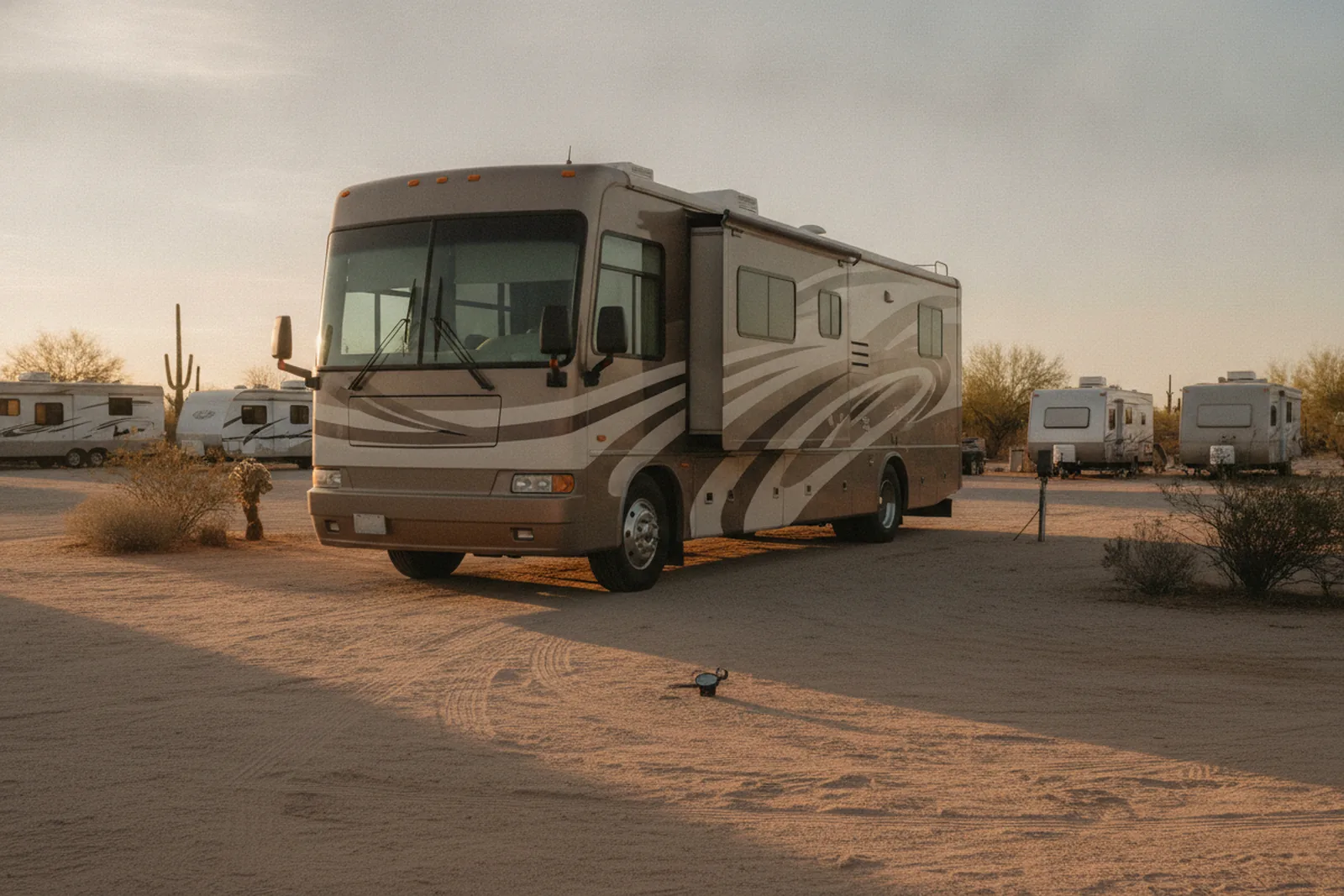
What a state inspection never looks at, but an RV inspection must
A state inspector will never put a moisture meter on your roof, never test your propane system with a manometer, never check your CO detector’s expiration date, and never load-test your generator under the AC.
Propane is worse. If pressure drops, there’s a leak. A state inspector might look at the big propane tank and check the date on a removable cylinder, he will not do a pressure test. He will not light a stove, then a water heater, then a furnace to watch for yellow flame. I found a brand-new 30-foot travel trailer with a propane leak at the range fitting once, on a dealer lot, with a state-valid sticker in the window. The salesman said it was “certified.” Certified by whom? Not the state.
For the full 15-system checklist I use, see the RV inspection checklist I wrote earlier. It’s what the state leaves out that costs you.
I found this pre-trip inspection video helpful for a Class A, and it lines up with what I check before any trip.
What I’d do instead of waiting for the state to inspect my RV
I don’t wait, because my own 2012 motorhome has never been asked for an inspection, and that’s fine.
If you’re buying a rig this year, book an independent inspector who will spend half a day, not half an hour. Figure two to eight hours depending on the rig size, and it runs a few hundred to over a thousand dollars. We’ve covered the costs by rig type elsewhere, or you can look up how much an RV inspection costs before you call. It’s not a state fee, but it’s the only inspection you’ll ever get that actually looks inside the walls.
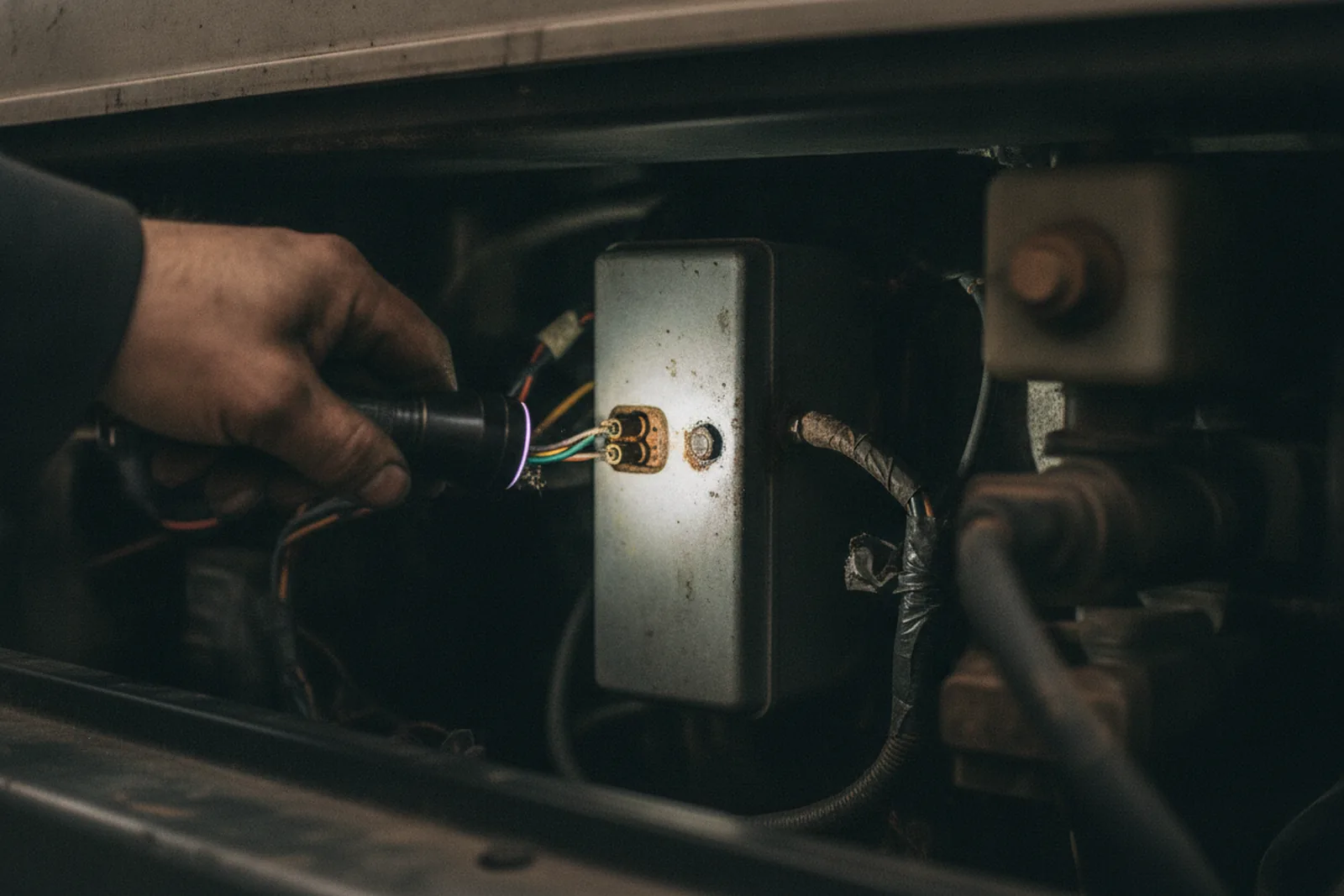
RV inspections near Las Vegas and across Nevada: the state won’t help you
Nevada is a perfect example, and the state won’t inspect the box, so I do it myself. I crawl underneath with a creeper, inspect the frame crossmembers, pull the dipstick, run every appliance on both propane and shore power. That’s why I tell people to compare RV inspectors accross Nevada before the state even knows they bought a rig. If you need mobile RV inspection in Las Vegas, we’ll come to the seller’s driveway or the dealer lot; no shop needed. A full motorhome inspection in Las Vegas includes the engine, chassis, generator load test, and everything inside the box. And because propane is the thing the state ignores and that kills people, ask for an RV propane inspection in Las Vegas as part of the package. For people outside Nevada, look up certified RV inspectors by state and city. The state will never catch these things for you.
The sticker gap won’t save you
Here’s what I’m willing to be wrong about: if you’re buying a rig and you rely on whatever state rules exist, you might as well flip a coin. The only inspection that matters is the one you pay for yourself, done by someone who has no reason to sell you the RV. A six-hour moisture meter and manometer inspection tells you whether you’ll still have a floor and a roof in two years. Do that before you hand over the cash. Pull up an independent or mobile RV inspector near you and ask two of them what there report includes and what they charge for your rig. Then watch what they do when they get there. If they spend less than two hours on a motorhome, keep your money.
Related reading
FAQ
Does a travel trailer need a state inspection?
Most states do not require a periodic safety inspection for travel trailers. Some require a one-time VIN verification when bringing the trailer in from out of state, and many enforce trailer brake laws by weight, but the threshold and enforcement vary by state. Check your state DMV before you buy, because the rules can change and I cannot list every state here accurately.
What is included in a state RV inspection?
In states that have one, a motorhome safety inspection usually covers lights, turn signals, brake function, horn, mirrors, wiper blades, tire tread depth, and sometimes emissions on the chassis engine. It will not inspect the roof, plumbing, propane system, appliances, water damage, or frame rust inside walls. It is a road safety check, not a liveability check.
Does the state check my propane system?
No. A state inspection will not test propane pressure, check for leaks, inspect the regulator, or verify the detector. DOT removable cylinders must be requalified within 12 years of the manufacture date, but an inspector rarely looks at that. Propane leaks are a leading cause of RV fires and explosions, so a separate RV propane inspection by a trained inspector is the only way to be sure.
How old can my RV tires be before I need to replace them?
Tire manufacturers generaly say any tire in service 5 years or more should be inspected by a specialist annually, and replaced at 10 years from the date code on the sidewall, even if tread remains. Many RV owners replace at 7 years because of weather checking and internal degradation. State inspections only check tread depth, not age. The DOT code is the last four digits of the TIN; 2218 means 22nd week of 2018.
What is the difference between a state inspection and an RV inspection?
A state inspection is a low-level safety check for registration, often lasting 10 to 20 minutes and covering only road equipment, but the duration and scope vary by state. An independent RV inspection is a 2 to 8 hour close look into the roof, walls, frame, electrical, plumbing, propane, appliances, and chassis, often with a moisture meter, manometer, and load tests. The state checks if it can legally roll; an RV inspector checks if you can actually live in it.
Should I get an RV inspected before I buy it?
Yes,. A pre-purchase inspection costs a few hundred to over a thousand dollars depending on rig size and depth, but it can find thousands of dollars in hidden problems. I have inspected 15-year-old motorhomes that looked great outside and had rotten floors, dead generators, and leaking propane fittings. A state sticker means nothing for that. Pay for the inspection before you pay for the RV.
Find RV inspectors near you
Compare independent RV inspectors in your city, then ask a few for a price before you buy.
Browse by stateOr jump to: Lodi, CA · Bakersfield, CA · Weatherford, TX