RV propane tank inspection: dates, valves, regulators and hoses
By Ernie Takahashi · October 29, 2026
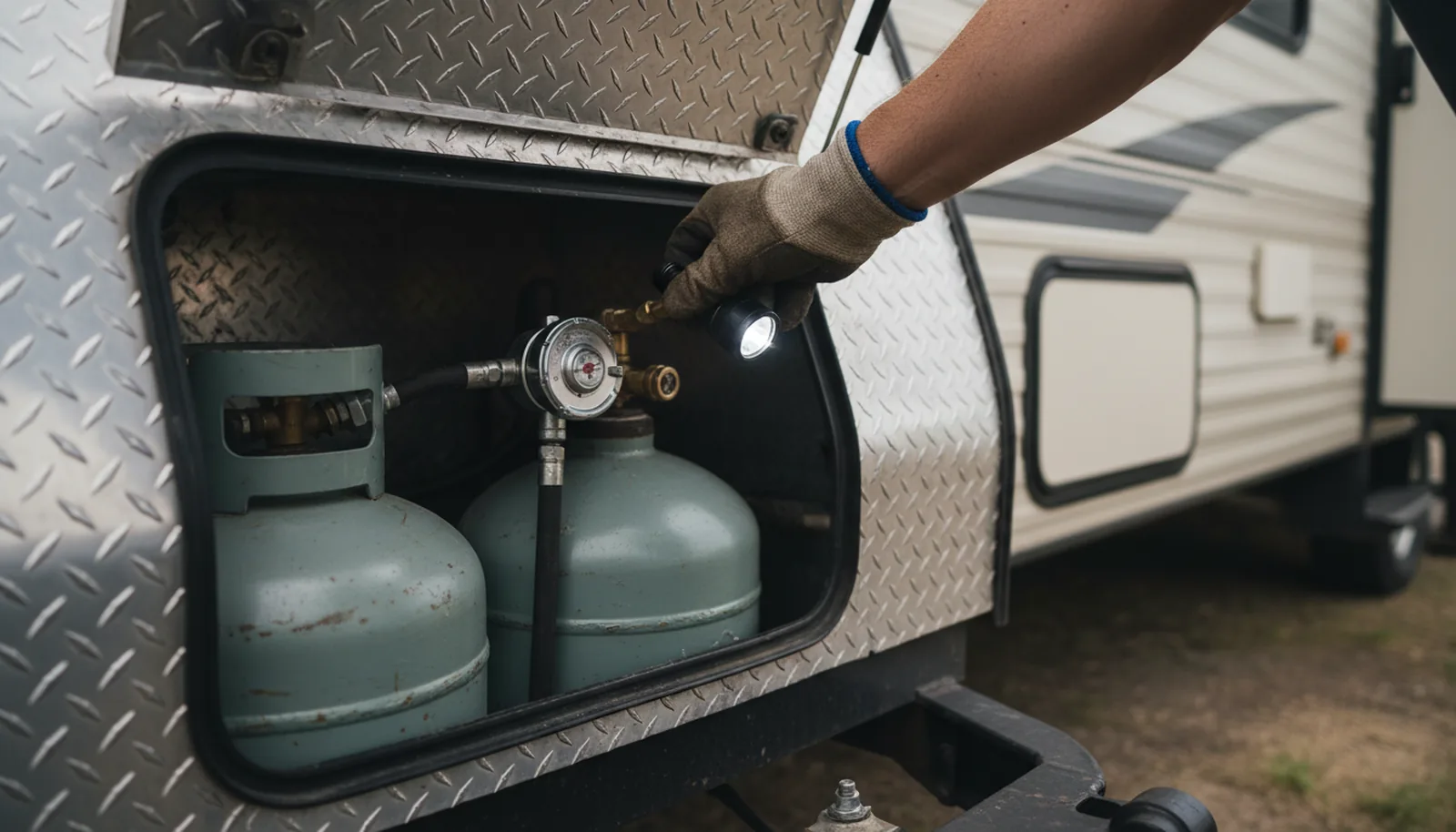
Three Julys ago I was on Highway 58 east of Bakersfield, headed up to Tehachapi for the weekend, when the rain started. Not a sprinkle, a real Central Valley gully-washer. Wipers on high, and I still couldn’t see the tanker ahead of me. That’s when it hit me: I hadn’t looked at my motorhome’s propane system since I bought the thing used in Surprise, Arizona, and I knew I should have gotten an RV inspection in Orange before heading out. The tank was full, the stove lit, but I’d never checked the regulator date or the hose for cracks. If a hose let go on that grade, I’d be pulling over with a fire I couldn’t outrun. I’m an RV inspector, and I’d been lazy with my own rig. That’s why I write this for owners who want a straight answer on RV inspection in Orange and everyplace else: propane doesn’t care if you’re an expert.
A good mobile RV inspection treats the propane system as a chain: tank, valve, regulator, hose, appliance, detector. Break one link and the gas either leaks or stops flowing. This post is your checklist for that chain.
I’ll show you exactly what I look at on a “RV propane tank inspection”, whether it’s my own Class A or a customer’s fifth wheel. And if you’re in California, in Las Vegas, or going to Austin, the same rules apply.
RV propane tank inspection: DOT cylinders vs. ASME tanks
DOT cylinders expire. The manufacture date is stamped on the collar near the valve. It’ll be a month and a year, like 03 17. That’s March 2017. A cylinder that is 12 years past that date needs requalification befor it can be filled, but check the collar for the most recent requalification stamp because the interval after that depends on the method used. After that, the interval depends on the method the requalifier used. If the collar says E, its good for 5 years. If it says S, 10 years. No letter, 12 years. These are the requalification intervals after the initial 12-year period.
What I check instead is the tank’s data plate and its mounting. That’s what the rest of this post is about.
How to read the cylinder date and when to requalify
My neighbor argued with me about his tank dates. The tanks went to the scrap yard and he bought two new ones.
Pull out the RV inspection checklist and write down the dates on your bottles. Put it in your phone. Set a reminder. It’s a five-minuite job. If you’re not sure about the stamp, take a photo and show it to a filling station. They’ll tell you.
Here’s a video that shows the basics of getting to know your RV propane tank.
Valves and OPD: what to check without a flame
Safety warning: Never use a flame to check for leaks. I don’t care if your grandpa did it. A spark plus a small leak equals a fire. Always, always, always use soapy water or a commercial solution. Shut the valve before you start spraying around any fitting you’re going to open. The gas will drain out of the line in a few minutes. Better to be safe than on fire.
One more thing on valves: the tank collar should be straight. If you’re not sure, have a propane dealer inspect it.
The regulator: age, vents, and why it fails
It’s a $30 part. Cheap insurance.
Safety warning: Don’t replace a regulator yourself unless you know what you’re doing. If you get the fittings cross-threaded or use the wrong kind of tape on a flare fitting, you can make a leak. Leave it to a qualified tech. The five minutes they charge is worth it. I once did a mobile RV inspection on a Class A in Surprise, Arizona. The regulator was still working but the body was half eaten by corrosion. The buyer used that to knock $150 off the price. Money well spent on the inspection.
The printable propane checklist
- Compartment venting: The tank compartment should have a vent to the outside, but check your rig’s design because some compartments are sealed and rely on other ventilation. The vent should be clear of dirt, wasp nests, and cargo. I once found a bottle jack shoved under a tank, blocking the vent. The owner had no idea.
- Inside detector: Test the LP detector, it should have a test button. Some beep, some flash. If it’s past the printed date, replace it. Do this at least twice a year, or every time you move the rig.
- Appliances: Light the stove. Does each burner have a blue flame with no yellow tips? The oven should light. The furnace should fire and push warm air. The water heater on LP should fire. If any of them soots up or won’t stay lit, call a tech.
- Leak test: With the system fully open, shut the tank valve. Watch the pressure gauge if you have one. If the pressure drops more then a hair in 5 minutes, you may have a leak, but a small drop can be normal as the system cools; confirm with a soapy water test. Close the tank valve and call for service.
Safety warning: Never use a flame to find leaks. Use a leak detection solution. If you smell gas or hear a hiss, shut the tank valve immediatly and get the rig inspected before using propane again.
Hoses and pigtails: cracks happen faster than you think
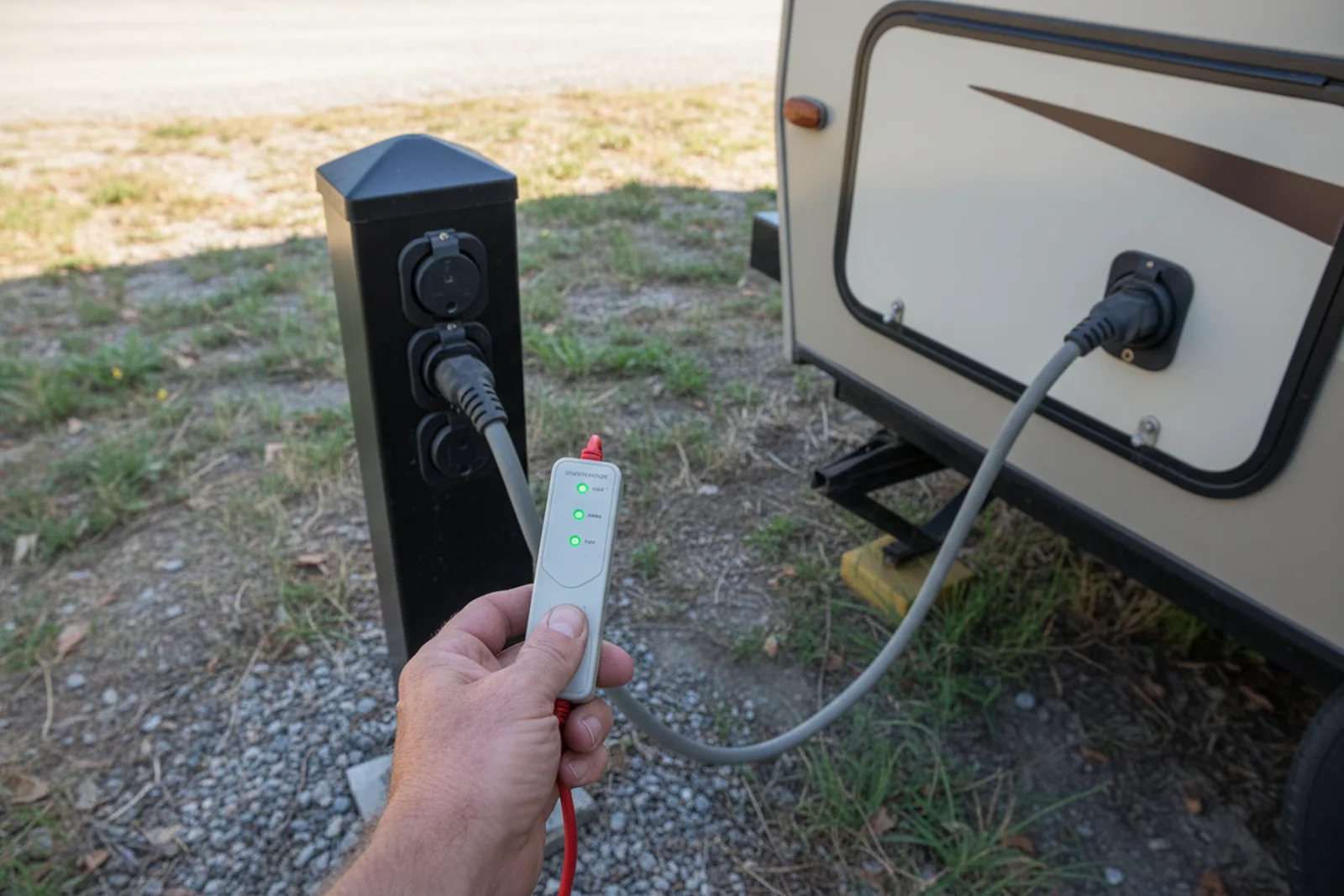
Others say 10. If you see a DOT marking, that’s the hose spec, not the date. The date is usually near the fittings. If there’s no date, replace it if it looks brittle or cracked. The pigtail on my own motorhome was original to the 2012 coach. When I bought it, the hose was still pliable, but I replaced it anyway because I didn’t know its history. It’s a $20 part. Less worry.
The other hose runs from the regulator to the copper tubing. On many rigs, it’s a flexible hose with a crimped fitting on one end and a flare on the other. It sees the same weather as the pigtail. Check it for cracks and chafing. If it rubs against the frame, it’ll wear through. Zip-tie it away from moving parts. A hose that’s missing its date code or is more than 10 years old should be replaced, but some manufacturers recommend replacement as early as 5 years, so check the hose condition and any printed date.
The LP detector inside: it has a lifespan too
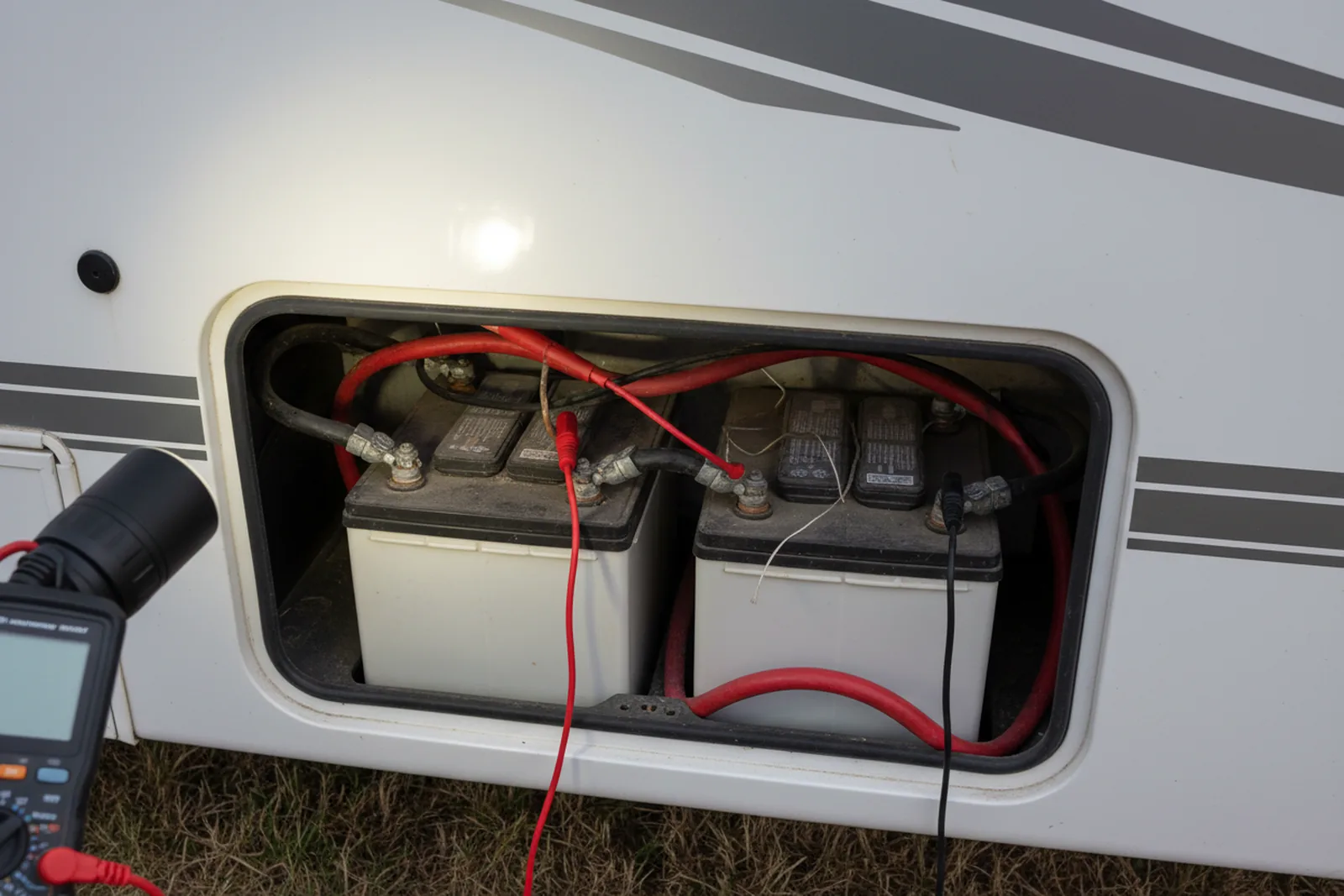
What about the carbon monoxide detector? It’s separate. It usually mounts on the wall or ceiling. It also has a lifespan, but the numbers vary by brand. Check the printed date. The smoke alarm, too. They’re cheap. If you buy a used rig, replace all three detectors unless you can verify they’re new. The RV inspection checklist I use has a line for each one, and my report always lists the dates.
Safety warning: Never disconnect the LP detector to silence it. Never paint over it. Never put it in a cabinet. It needs to be near the floor, in open air, so it can smell the gas. If it’s expired, replace it with a new one that has the same mounting pattern. It’s a five-minute job.
What I’d do before you buy
This weekend, grab a flashlight and go out to your rig. Read the tank date. Look at the regulator vent. Spray some soapy water on the fittings. If you find a crack or a drip, shut it down and call a pro. If you want a secound set of eyes, find a certified or mobile inspector near you and ask if propane checks are included in thier standard inspection, and see our post on how much does an RV inspection cost to budget for it. Most of us do it as a matter of course. If they don’t, find another one.
More from the inspection notes
FAQ
How long does a propane tank certification last on an RV?
A DOT propane cylinder must be requalified within 12 years of its manufacture date. After that, the interval depends on the method used: an E stamp means visual inspection within 5 years, an S stamp means proof-pressure test within 10 years, and no letter means volumetric expansion within 12 years. Check the collar stamp for the most recent date and letter. Built-in ASME tanks follow different rules, and there is no universal date that applies.
How do I know if my RV propane regulator is bad?
The telltale signs are a low flame on the stove, a furnace that won't stay lit, a hissing sound from the regulator vent, or visible corrosion on the body. If the vent doesn't point down, water can enter and freeze the diaphragm. Regulators over 10 years old should be replaced even if they seem to work, but some manufacturers recommend replacement as early as 5 years, so check the regulator's condition and any printed date. A pressure test with a manometer can confirm low output; normal LP pressure is about 11 inches of water column.
Can I use a flame to check for propane leaks?
Never. A flame can ignite the gas and cause a fire or explosion. Always use a leak detection solution, such as commercial spray or a mix of dish soap and water. Spray around valves, fittings, and hoses. If bubbles form, you have a leak. Shut the tank valve and have the system repaired by a qualified technician.
How often should I replace the propane hoses on my RV?
The pigtail hose and regulator hose shoudl be replaced every 5 to 10 years, depending on the manufacturer and condition, but some manufacturers recommend replacement as early as 5 years, so check the hose condition and any printed date. Check for cracking, stiffness, chafing, and a missing or worn date code. Hoses exposed to sun and weather degrade faster. Always shut the tank valve and bleed the pressure before disconnecting any hose, and use proper wrenches on flare fittings.
Why does my LP detector keep beeping?
A beeping LP detector can mean propane is present or the sensor is at the end of its life. If you smell gas or the beeping is steady, shut off the tank, open windows, and leave the area. If the beeping is intermittent and no gas is present, check the date on the back. Most detectors last 5 to 7 years, but check the printed date on your unit because some expire sooner or later. Replace the unit if it is past the printed date or fails the test button.
Do RV propane tanks need to be inspected every year?
The tank itself may not require a yearly inspection if it is a DOT cylinder within its requalification interval, but the entire propane system should be leak-tested and visually checked at least once a year. That includes the regulator, hoses, valves, and inside detector. An NRVIA-certified inspector performs a timed leak test at 8 inches of water column for 5 minutes as part of a standard inspection.
Can I fill an out-of-date propane cylinder?
No. It is illegal and unsafe to fill a DOT cylinder that is past its requalification date, but the rules for built-in ASME tanks are different, so check your tank type. Filling stations are required to check the collar stamp and refuse service. The tank must be requalified by a certified facility or scrapped. Do not use the tank for any purpose until it has a current stamp.
Find RV inspectors near you
Compare independent RV inspectors in your city, then ask a few for a price before you buy.
Browse by stateOr jump to: RV propane inspection · West Palm Beach, FL · Port Charlotte, FL · Conroe, TX