RV Inspection: What It Is and What Happens on Inspection Day
By Della Marsh · October 21, 2026
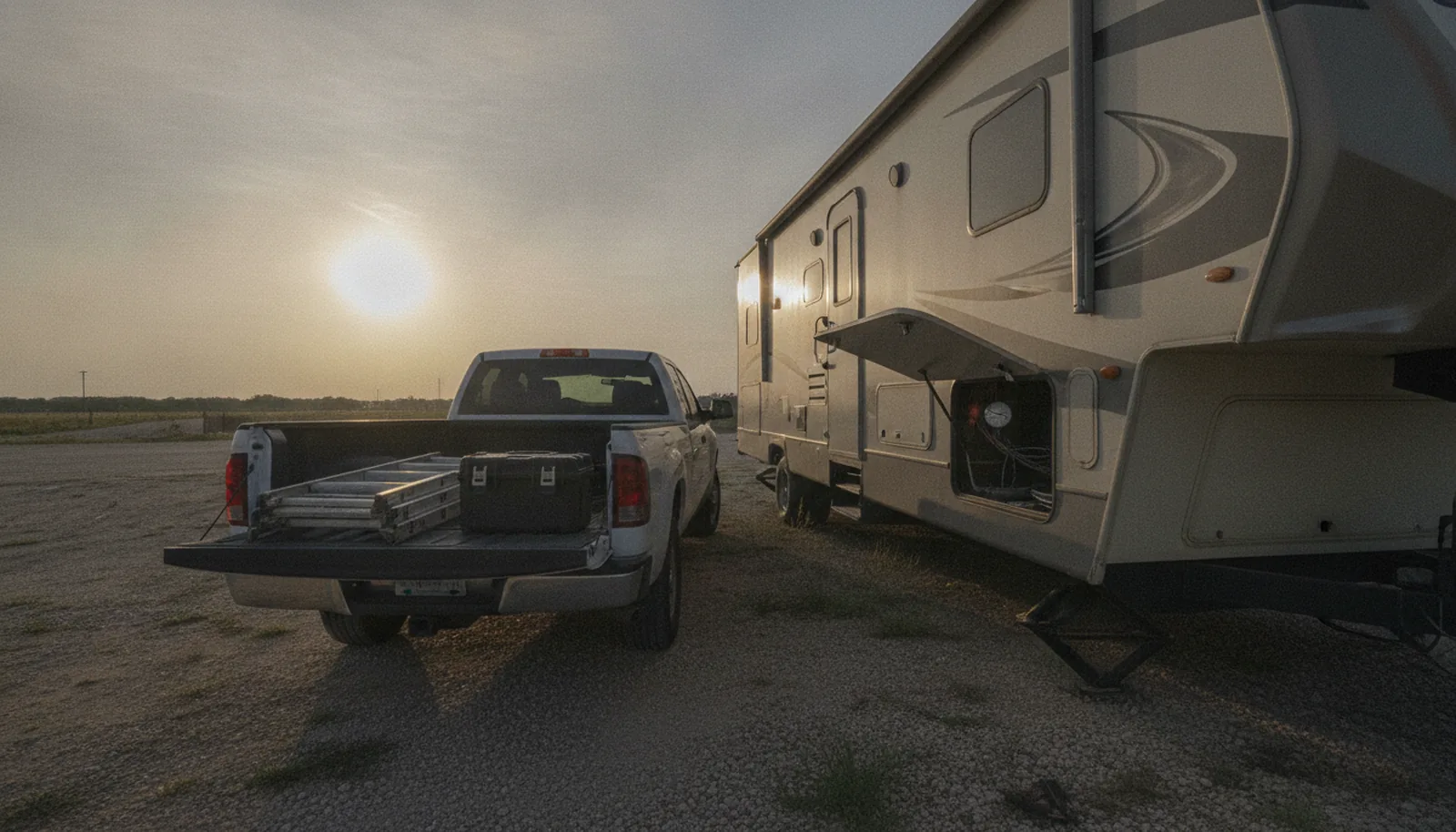
In June, a buyer handed me the keys to a 2015 travel trailer and said, “Don’t find anything.” I found three life-safety issues and a cold furnace. His down payment turned into a repair list. That’s what I do: I’m Della Marsh, an independent RV inspector in Fort Worth, and I’ve done 2,147 of these. A house inspection and an RV inspection share a word, but the house doesn’t roll down I-35 at 65 miles an hour.
An RV inspection for buyers in Denton is a visual and functional check of a rig on one day.
What a certified RV inspection is, and is not
A certified RV inspection is a standards-based evaluation by an independent inspector, and it will not promise you a trouble-free rig. The National RV Inspectors Association sets a standard of practice that says the inspection is visual and functional, not technically exhaustive.
My job is to find and document. Your job is to decide.
I was a home inspector for 15 years. People asked if their HVAC would last five years. I had to say nobody can promise that. Same in RVs. The report says what was true on inspection day. It cannot predict a water heater failing a month later.
When to order an RV inspection
Most people call me before they buy a used rig, and the best time is before money changes hands. Owners also order annual inspections, sometimes called warranty checks, to catch problems before a long trip.
A 2021 NRVIA member survey said 41 percent of inspections were on new dealer-ready units. Twenty percent of those found life-safety issues, and 35 percent found major issues. Buyers went ahead 90 percent of the time, using the report to negotiate repairs.
If you’re buying, get the inspection before money changes hands, and make the sale conditional on it. Put it in writing. A seller who refuses? I’d walk.
What I do on inspection day, start to finish
My inspection follows the same order every time: exterior walk-around, roof, underside, systems on shore power and propane, interior, then a test drive or tow check.
Here’s the sequence, and what I’m really looking for:
- Exterior walk-around: I walk the rig looking for cracks, delamination, and sealant failures. I run my hand along the roof line and around windows. I check tire date codes and tread.
- Roof: I get on top if it’s safe. I look for tears in the membrane, cracked lap sealant, and soft spots. I use a moisture meter on suspect areas.
- Underside: I crawl underneath with a flashlight. I check frame welds, suspension parts, brake lines, and holding tanks.
- Systems on shore power and propane: I plug in, run the AC and measure the temperature split. I test the refrigerator on electric, then switch to propane. I run the water pump and look for leaks.
- Interior: I open every cabinet, check every outlet with a polarity tester, and test the carbon monoxide, LP, and smoke detectors.
- Test drive or tow check: For motorhomes, I ride along and listen. For towables, I hitch up and check the brake controller and breakaway switch with the owner driving.
Everything I see goes into a written report, which is where the inspection turns into something you can use to negotiate.
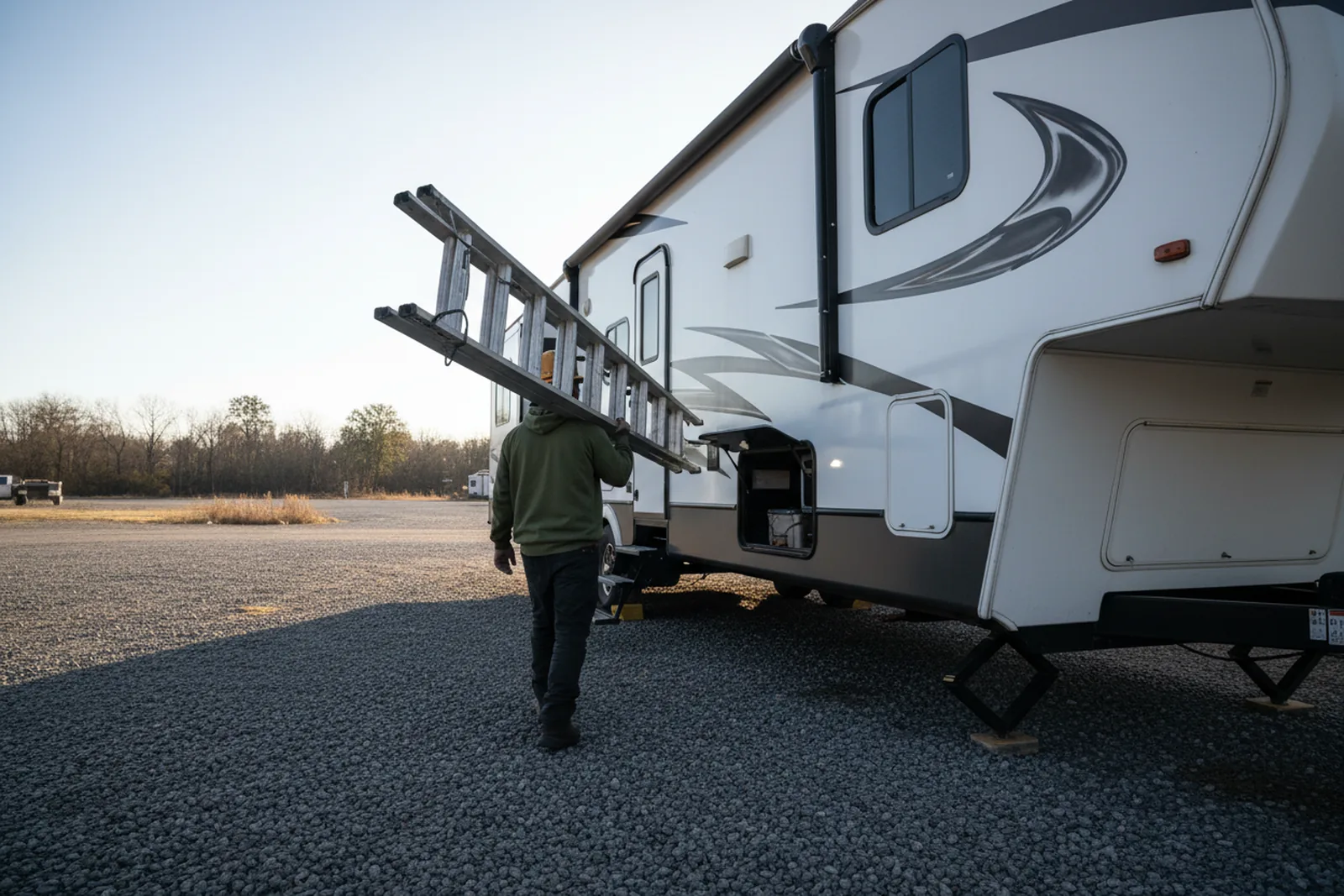
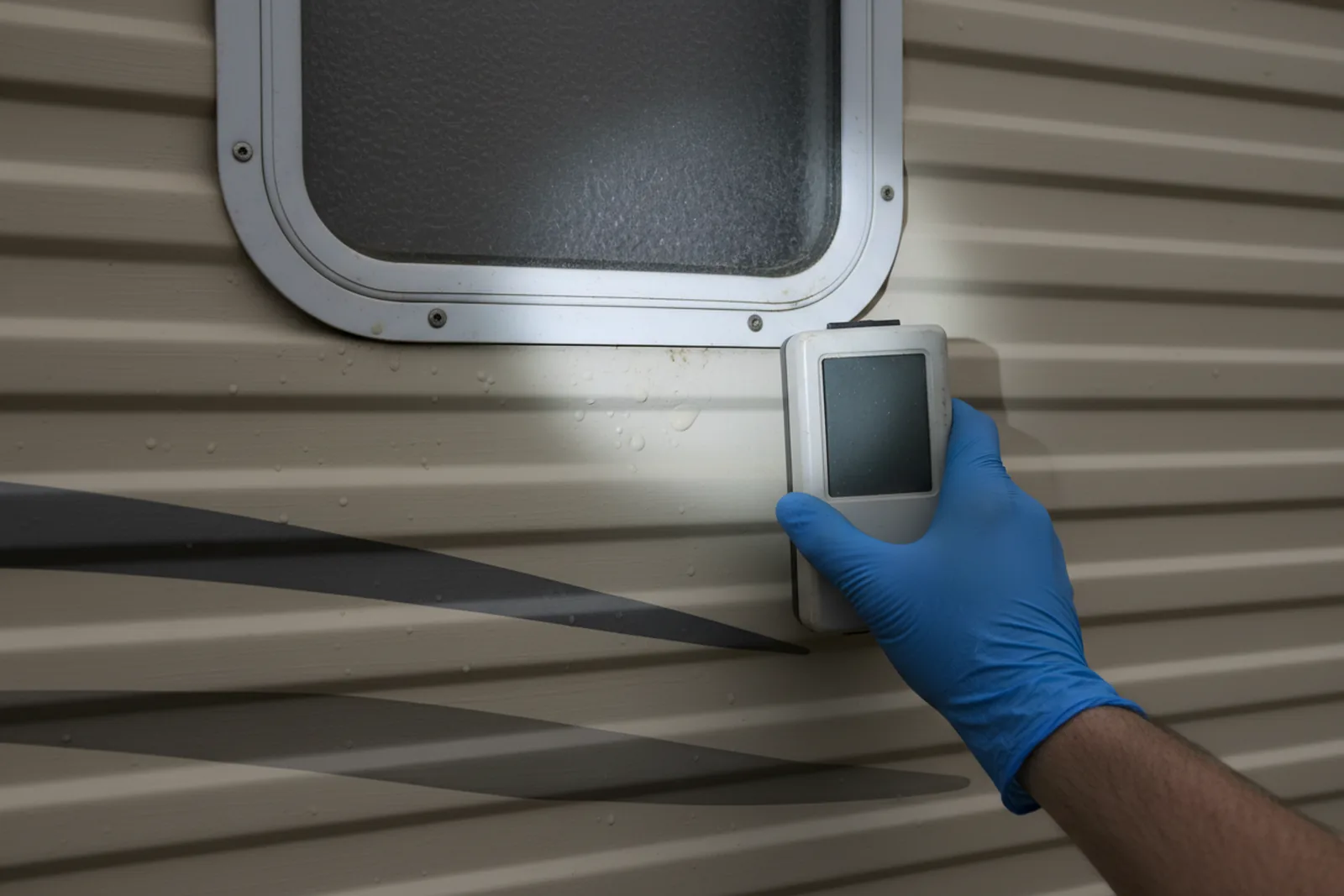
If you’re wondering what really gets checked, this video walks through the truth about RV inspections.
The report: what you get and how to read it
Most inspectors deliver a digital report with photos within 24 to 48 hours. Mine runs 30 to 60 pages for a typical towable. Each finding is tagged as a safety item, major issue, deferred maintenance, or observation. Safety items are things like a missing carbon monoxide detector or a hot-skin voltage. Major issues affect use and value, like a failed refrigerator. Deferred maintenance is normal wear, like a roof seal that needs resealing.
Here’s a sample of how I structure findings on a water damage call:
| Finding | Location | Category | Recommendation |
|---|---|---|---|
| Elevated moisture reading | Rear wall below window | Major | Further evaluation by technician; possible reseal and interior repair |
| Cracked lap sealant | Roof seam at front cap | Deferred | Clean and reseal before rain |
| Soft spot in floor | Bathroom outside shower | Major | Replace subfloor section; inspect for mold |
The report is not a repair quote. You take it to a shop and say, “Here’s what my inspector found. What does it cost to fix?” I never quote repairs, becuase under my code of ethics, I can’t profit from fixing what I inspected for a year.
What an inspection costs, and what makes it vary
Prices range because inspectors set their own. The main drivers are rig type, lenght, age, depth, and travel. Basic pre-purchase inspections can run $100 to $300, detailed ones $300 to $800, and advanced with fluid testing $800 to $1,000 or more. A travel trailer under 25 feet is often $350 to $450. A diesel pusher can be $650 to $1,500 or more. Add-ons like fluid analysis run $200 to $300.
I charge by the hour, not the foot. A well-kept 30-foot fifth wheel takes me less time than a neglected 20-foot travel trailer. My fee includes travel within 25 miles; beyond that, $0.75 a mile.
When you call an inspector, ask what’s in the report, how many photos, and how long it takes. If they won’t send a sample report, keep looking. The certified RV inspectors nationwide list is a good place to start.
What the inspection does not do
We do not move furniture or stored items. We do not lift flooring or open walls. We do not test indoor air quality. We do not estimate life expectancy. We do not promise no future problems.
If somthing is not readily accessible, I note it. If a system is present but not inspected, I say why. The NRVIA standard requires that.
I had a buyer ask me to inspect behind a bolted-down cabinet. I said no. Another asked if the roof would leak next spring. I said I can’t know that. I inspected the lap sealant, found it cracked, and recommended resealing. That’s the best I can do.
Why the first RV job surprised me
My first RV inspection was a 2008 Class C that looked immaculate. The roof was original, the decals were shiny, the interior smelled like new. Then I tested the propane system. The pressure held for five minutes, but the LP detector was dead. The owner had unplugged it because it beeped when she cooked. I also found a hot-skin voltage at the water heater hatch. She’d been plugging in at campgrounds for years.
That day I learned RVs hide problems behind nice paint. A house inspection often finds cosmetic issues. An RV inspection often finds safety issues hiding in plain sight, like a detector that’s been unplugged.
If you’re not sure whether a mobile or shop inspection works better for your rig, read my post on mobile RV inspection vs taking the rig to a shop. For a buyer’s honest take on whether an inspection is worth the money, see this review of RV inspection services.
One thing I’d do differently if I bought another RV
I’d order an inspection before I put down a deposit. I bought my own travel trailer without one, and within a month I paid $800 to replace a brake assembly and a wheel bearing. The inspector would have caught the cracks in the drum.
This weekend, find two inspectors near you, ask for a sample report, and ask what there report includes for a rig like the one you want. Compare the answers. Don’t just book the cheapest one. A good report pays for itself in the first month of ownership, and it’s the only part of the buying process that tells you what the seller maybe won’t.
More from the inspection notes
FAQ
How long does an RV inspection take?
A small travel trailer or pop-up takes about 2 to 4 hours on site. A mid-size motorhome takes 6 to 8 hours. A large diesel pusher can take 8 to 10 hours or more. Report writing adds a few hours. Confirm the exact time with the inspector before booking.
How much does an RV inspection cost?
Costs vary widely by region and rig type. Basic pre-purchase inspections can run $100 to $300, detailed ones $300 to $800, and advanced with fluid testing $800 to $1,000 or more. A typical travel trailer inspection is $350 to $550, while a diesel pusher can be $650 to $1,500 or more. Add-ons like fluid analysis cost $200 to $300.
What does an RV inspector look for?
An inspector checks the roof, exterior, underside, and interior for damage, delamination and leaks. They test the electrical, plumbing, and propane systems, and run the appliances. For motorhomes, they inspect the engine compartment and go on a test drive. For towables, they check brakes, bearings, and hitch components.
Does an RV inspection tell me if the RV will break down later?
No. An inspection is a visual and functional check on one day. It documents current conditions and identifiable risks, like a cracked seal or worn tire. It cannot predict future failures. No inspector can promise that.
Can I do my own RV inspection?
You can walk thru the rig with a checklist, but an independent certified inspector brings experiance, tools like a moisture meter and manometer, and an objective eye. A seller may miss or not disclose issues. An inspector works only for you and has no interest in the sale.
What do I need to provide for the inspection?
You need access to the RV, shore power, propane, water, keys, and seller permission if it's not your rig. If its winterized, ask the seller to de-winterize it so the water systems can be tested. Most inspectors bring their own tools.
Find RV inspectors near you
Compare independent RV inspectors in your city, then ask a few for a price before you buy.
Browse by stateOr jump to: Denton, TX · Peoria, AZ · Miami, FL