RV inspection certification explained: the levels and what they mean
By Della Marsh · October 21, 2026
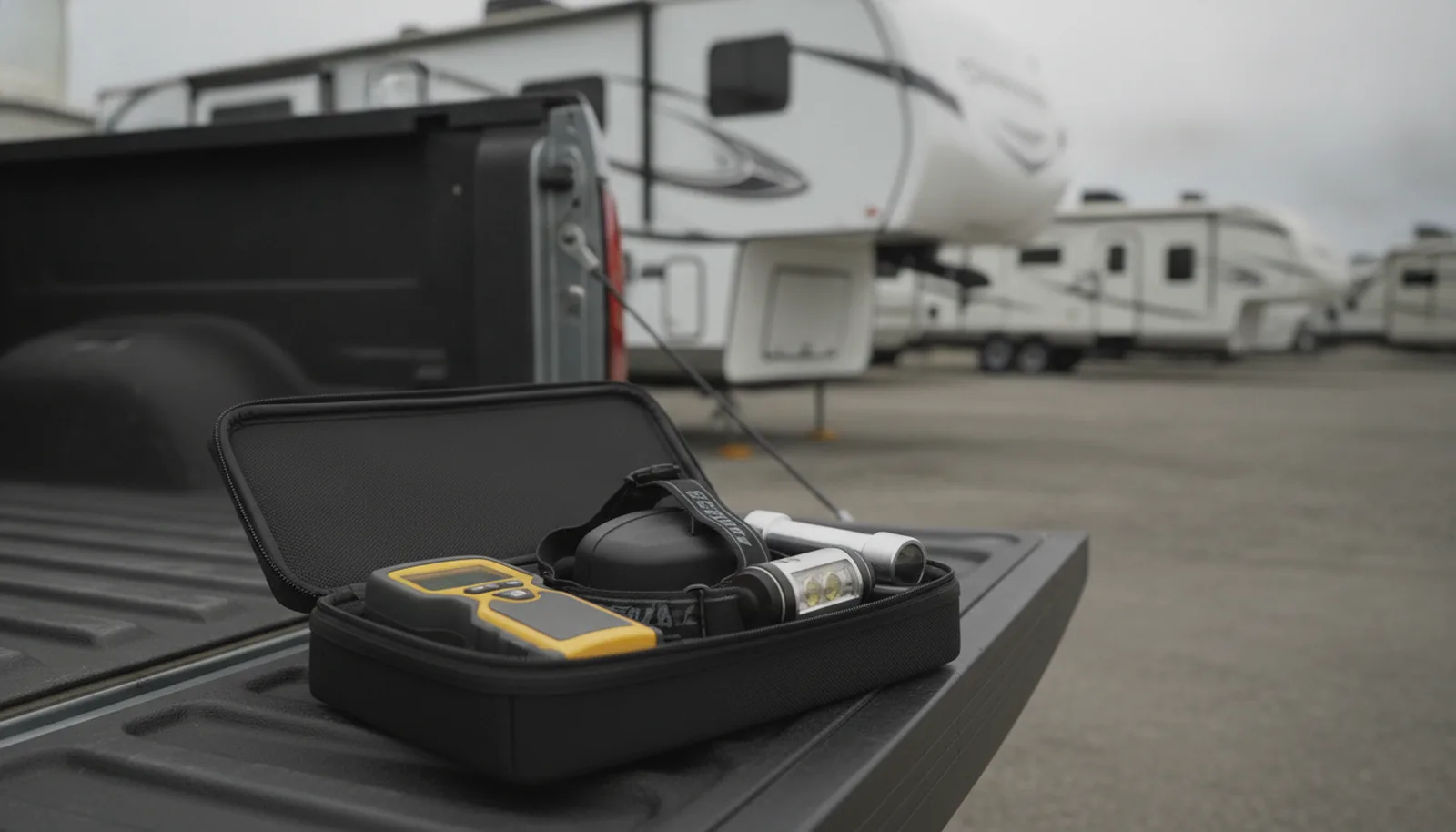
The first time I ran a manometer on a customer’s fifth wheel in an Arlington storage lot, the needle wouldn’t hold at the normal operating pressure of about 11 inches of water column. I stood there in the heat watching it drift, and that told me more in ninety seconds than the seller’s word ever would. I’d done home inspections for fifteen years before I crossed over, and I figured a trailer would just be a small house with tires. It’s not. The RV side has its own school, its own tests, and it’s own way of lying to you. My RV inspection certification didn’t teach me to read a manometer in the sun; it taught me to trust what I saw over what I heard.
If you’re about to spend $40,000 on a used travel trailer, the words “certified RV inspectors in Denton” shoudl show up on your phone.
What RV inspection certification actually is
The short answer is a private national training program with a written exam and a pass/fail practical inspection on a real rig. I trained through the national RV inspector program. The coursework ran about three weeks of contact hours, then two practice inspections with a trainer watching, then a written exam: 105 multiple-choice questions in 95 minutes, 70 percent to pass, and after that a pass/fail practical inspection on a real rig.
Once you’re through, staying certified means continuing education every year.
What certification is not: a state license. Most states don’t license RV inspectors at all. The standard itself says the inspection is visual and functional, not technically exhaustive, and it doesn’t estimate life expectancy. I remind people of that before I even roll out my ladder.
The levels, and what each one adds
The basic certification covers what most buyers think of first: roof, exterior, slides, electrical, plumbing, propane, appliances, interior, and on motorhomes the chassis. That’s a Level 1.
Higher levels exist. I’d call it Level 2 when the inspector puts a pin meter into a suspicious wall or puts the transmission under load.
One credential called Master Certified Inspector showed up in January 2021. It asks for at least two years running an insured RV inspection business, fifty verifiable advanced inspections, an active RV technician credential, ten good public reviews, an article or talk, and a business website. Not an easy box to check.
What the training doesn’t teach
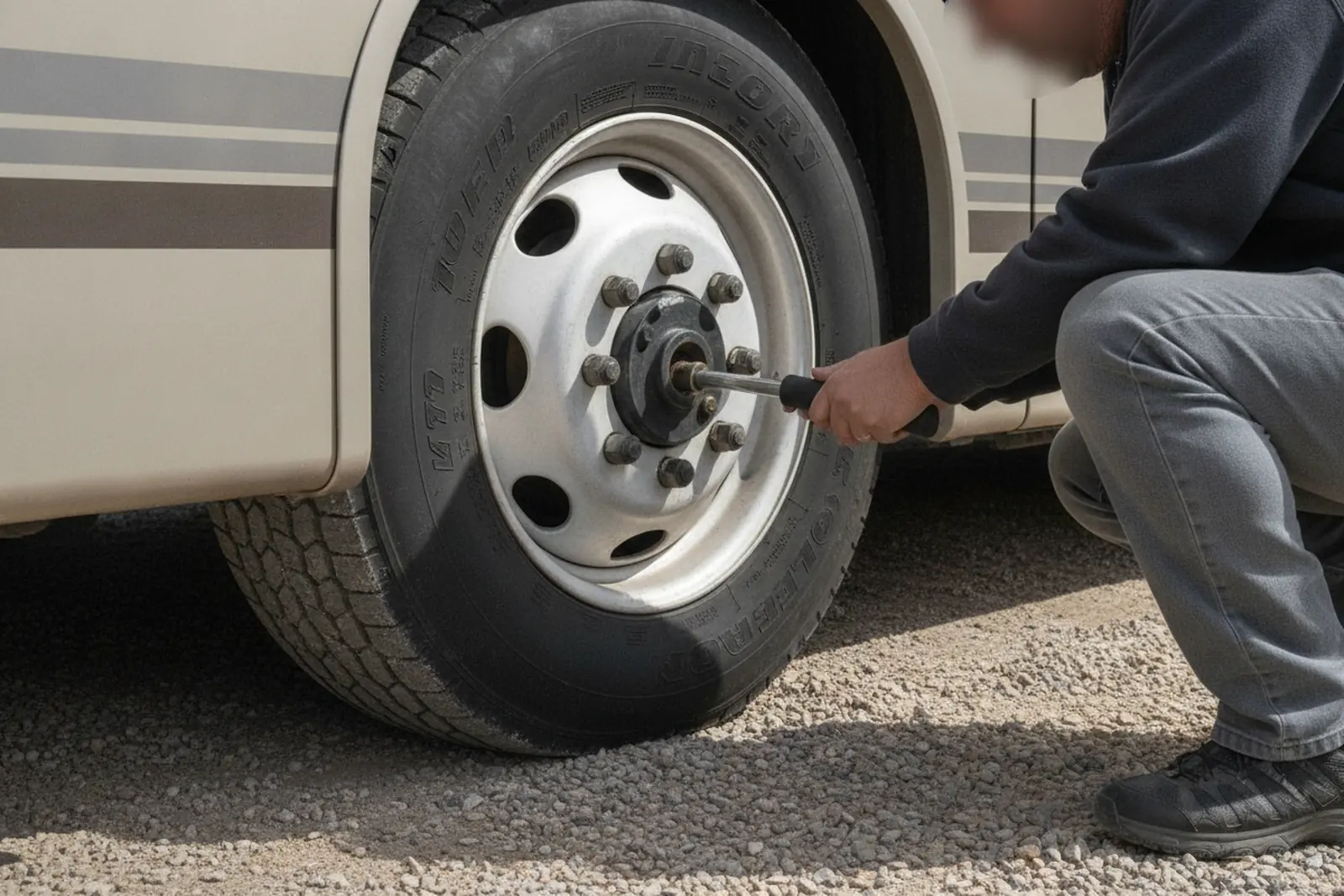
My first RV inspection blind spot was tires, and I learned it on my own trailer. On my own trailer, a 2017 25-foot travel trailer, I’d checked tread by eyeball for a year and missed a DOT date code showing the tires were allready six years old. Nobody fails you for that in a classroom. The highway teaches it.
Another gap: propane. On an RV I run a manometer and hold the LP system at 8 inches of water column for 5 minutes, which is the standard leak test. A removable tank has a requalification window: within 12 years of manufacture, then again every 5, 10, or 12 years depending on the method stamped on it, but built-in ASME motorhome tanks follow different rules. Buyers never know to ask, which is why I bring the gauge out early.
This is why a home inspector who does RVs on the side can miss things. Ask if the person has RV-specific training. Ask if they can read a manometer. Ask if they know what a hot-skin test is. Those are not home inspection questions.
I found this video helpful when I was starting out; it covers the training and tools you need.
Certification vs. other credentials: a cheat sheet
Every week I get calls from buyers who found an “RV specialist” online, so here’s what each signal tells you, and what it leaves out.
| Credential or signal | What it tells you | What it does not |
|---|---|---|
| National RV inspector certification | The person passed a written and practical exam and takes continuing education | That they inspected your type of rig before, or that they found every problem |
| Master Certified Inspector | Two+ years in business, 50 advanced inspections, active technician credential, public reviews | That their schedule is open, or that they have a thermal camera |
| State home inspector license | They know building systems; some states require this for house work | That they know RV systems, especially chassis, brakes, and LP |
| RV service technician | They repair RVs daily, so they know failure patterns | That they follow an inspection standard or write a neutral report |
| Dealer PDI sticker | The selling dealer’s techs looked the rig over | That it was independent; the dealer wants the sale |
One red flag I hear all the time: an inspector who also sells repairs. The national code of ethics says I can’t take money to fix a system I inspected for at least a year, and I can’t take referral fees from a repair shop, which keeps the report neutral. That keeps the report neutral.
State licensing: what Texas actually requires
I get this question a lot because I still carry a Texas home inspector license, and the answer surprises most buyers.
As of my last check, no state licenses RV inspectors as a separate trade, but state rules can change, so verify for your state.
So when a buyer asks me if I’m licensed, I walk them through the difference between a state license and a private certification. The private certification is the one that tests me on slide-out water intrusion and DOT propane cylinder dates. A state license won’t do that. I keep both, and I know which one matters in a storage lot.
What else to check before you hire me or anyone
After fifteen years of inspections, I’d tell a buyer to ask five things:
- Proof of insurance. The certification program requires professional liability coverage, according to the association. Ask for a current certificate. If they hesitate, walk.
- A sample report. One from the same rig type you’re buying. If it’s 10 pages and mostly checkboxes, ask if they also write defect narratives. Mine run 40 to 60 pages with photos.
- How many RVs they inspected last year. There’s no required minimum. But if the answer is “three,” you’re the practice.
- What tools they carry. Manometer, moisture meter with pins and pinless modes, outlet tester, thermal camera maybe. Not just a screwdriver and a flashlight.
- Whether they sell repairs or parts. If yes, find someone else. Same reason I won’t inspect my own rig and call it neutral.
Also ask what level they hold.
A 12-point inspection is not the same thing. What a 12-point RV inspection actually covers, and what it skips is worth reading before you book anything, because those are often little more than a walk-around and a battery check.
How to compare certified inspectors near you
The question is not just who is certified, but what you get for the money. When I moved from home inspections to RVs, the two-page report I used to write for a three-bedroom house became a 60-page PDF with photos of every wall seam and every LP fitting. That changed how I price my day and how long I spend on a roof.
The secound factor is cost. Travel beyond about 25 to 50 miles usually adds a mileage fee, so an inspector accross town and one two counties away will quote differently, but some inspectors include more miles.
Money is only part of it. I’ve seen buyers pick the cheapest inspector and get a 12-page checkbox report that missed a soft slide floor. Then the $300 they saved became a $3,000 floor repair.
If you want to see what a real inspection involves before hiring one, this honest look at DIY RV inspection vs hiring a pro covers what you can check yourself and what you can’t safely reach. But no DIY test replaces a manometer or a pin meter in someone who reads them weekly.
What certification looks like on a real report
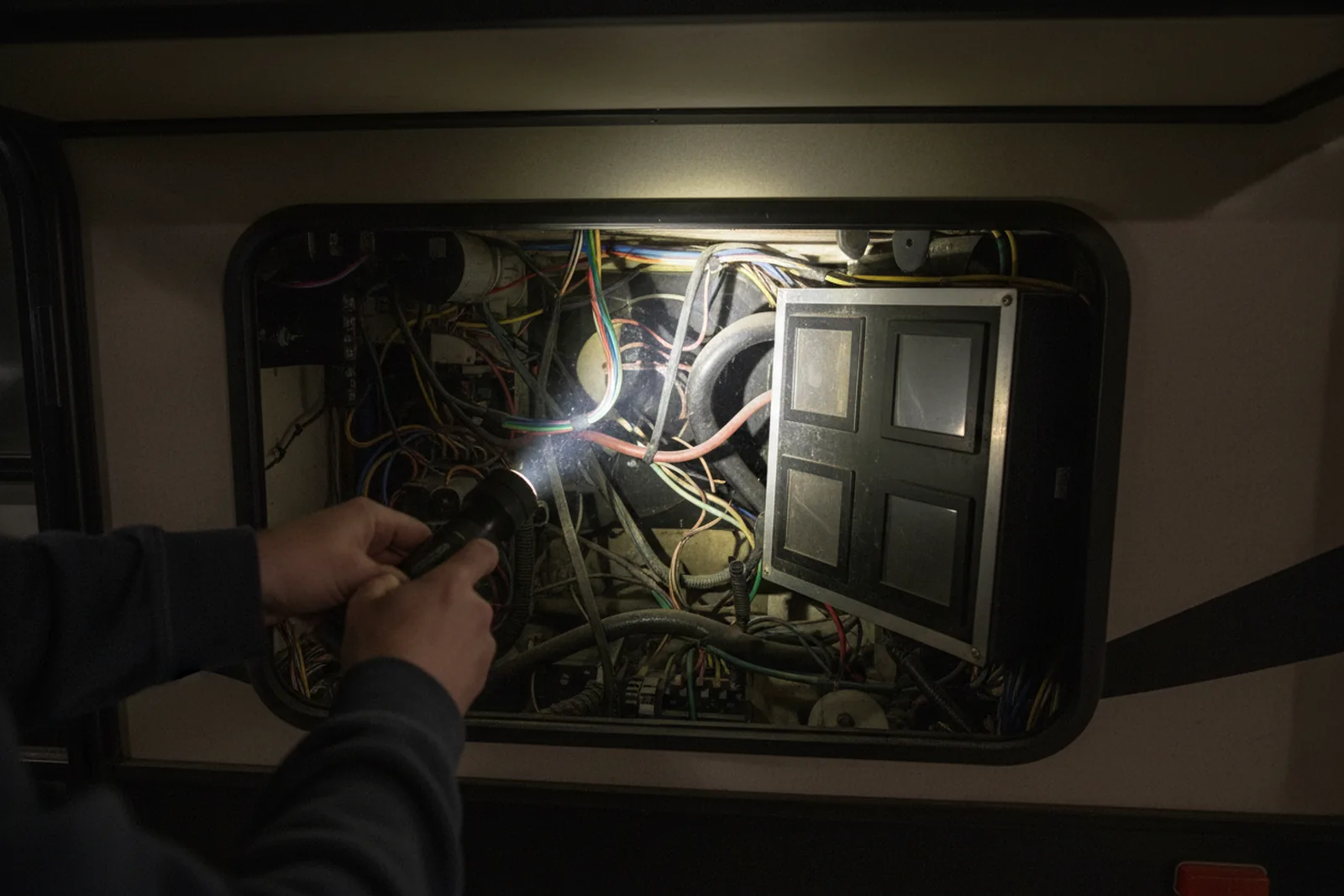
A few weeks ago I inspected a 2018 travel trailer in Saginaw and found a burned 30-amp shore power inlet, a GFCI that wouldn’t trip, and a propane regulator leaking at the diaphragm. The owner handed me a one-page photocopy of an “RV inspection” from a mobile tech who’d looked it over six months prior. It had twelve boxes, all checked. The owner stared at the photocopy and said, “But he checked all the boxes.”
That’s the difference between a credential that tests real skill and one that doesn’t. My signature line says certified RV inspector, but what the buyer actually gets is 200 photos and a defect list written in plain English. The credential gets me in the door; the report does the work.
Certified inspectors nationwide vary in depth and price. The certified RV inspectors page on this site lists people I’d trust to hand a buyer, and it explains what to ask each one before you book. I’d start there.
The weekend test I’d give a seller
If I was buying a used RV this weekend, I’d ask the seller to plug the rig into shore power, fill the fresh tank, and leave the propane on for an hour befor I arrive. That lets me run the fridge, the furnace, the water heater, and the pump all at once. It’s the simplest way to catch a system that works alone but fails under normal load.
Then I’d call two certified inspectors near the rig and ask each one two questions: what level do you hold, and what does your report include for this exact make and length. That phone call takes five minutes and tells you more then any website.
The certification matters. The human holding it matters more.
More from the inspection notes
FAQ
Is RV inspection certification required by law?
No. Most states don’t license RV inspectors at all. Certification comes from a private national program that tests and trains inspectors. It’s a credential, not a state license. A few inspectors also hold a state home inspector license, but that covers houses, not travel trailers or motorhomes.
What does a basic certified RV inspection include?
A basic certification covers the roof, exterior, slide-outs, chassis, electrical, plumbing, propane, appliances, interior, and on motorhomes the engine and drivetrain, mostly visual and functional. It does not move stored items, open walls, or estimate life expectancy. Higher levels add things like fluid analysis or deeper chassis testing.
What’s the difference between an RV inspector and an RV technician?
A technician repairs RVs. An inspector evaluates condition and writes a report, and under the national code of ethics cannot also sell repairs on a system they inspected for at least a year. Some people hold both credentials, but the inspection should remain independant from the repair work.
How do I check if an RV inspector is really certified?
Use the inspector locator on the national association’s site and confirm the listing shows the credential. Then ask the inspector for their certification number, proof of insurance, and a sample report from the same RV type you’re buying. A real certified inspector will send all three.
What’s a Master Certified RV Inspector?
A Master Certified Inspector has run an insured RV inspection business for at least two years, completed 50 advanced inspections, holds an active RV technician credential, has 10 or more good public reviews, and has published an article or talk. It’s an experience mark, not a guarantee that they’ll find every defect.
Do I need a higher certification level to inspect a motorhome?
Not necessarily, but it helps. A basic certified inspector can do a motorhome, but a diesel pusher especially benefits from someone with chassis experience, generator load testing, and fluid analysis. Ask the inspector how many of you're exact rig type they inspected in the last year.
Can a certified inspector tell me if the RV is safe to drive?
An inspector can flag life-safety issues like tire age, brake condition, hot-skin voltage, and LP leaks. But a certification is not a warranty and the inspection is not technically exhaustive. The report tells you what the inspector observed, not a guarantee that nothing will fail later.
Find RV inspectors near you
Compare independent RV inspectors in your city, then ask a few for a price before you buy.
Browse by stateOr jump to: Port St. Lucie, FL · Defuniak Springs, FL · Austin, TX