Mobile RV inspection service vs taking the rig to a shop, honestly
By Della Marsh · October 21, 2026
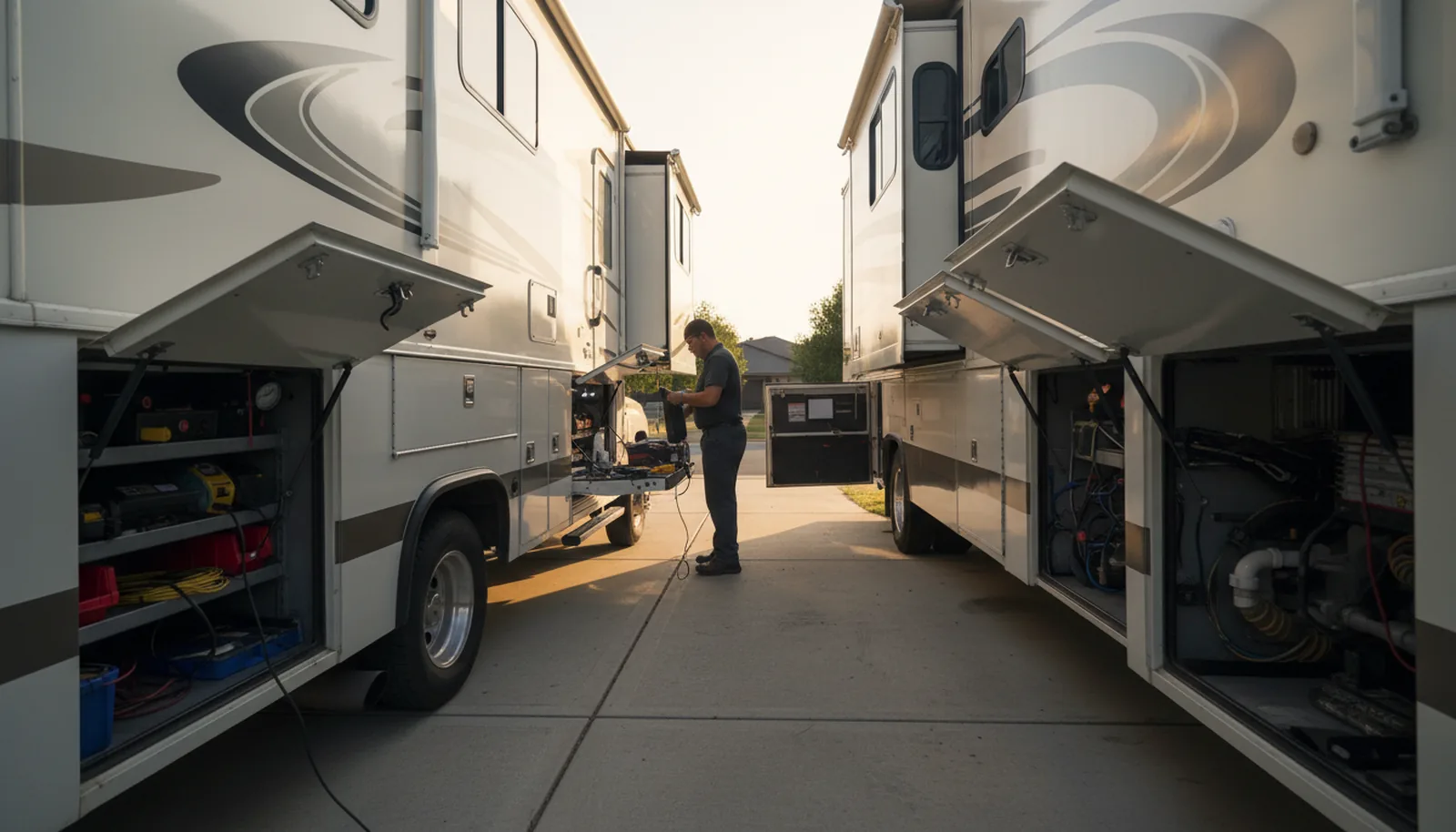
Last March I stood in a mud lot north of Fort Worth, staring at a fifth wheel with the slides in and no power cord in sight. I run a mobile RV inspection service, so when a client asked me about mobile RV inspectors in Austin, the seller here handed me the keys and said, “Hope you brought a flashlight.” I had, plus a ladder, a multimeter, and a lot of patience. My 2017 travel trailer sat at home, but this was work. I’m Della Marsh, and I’ve inspected RVs for six years. There are two ways to get a rig checked before you sign: I come to it, or it comes to a shop. Most folks think a shop’s bay must be more thorough. That’s only half true. If your near Austin, you can start with mobile RV inspectors in Austin.
What a mobile RV inspection service actually does at the rig
A mobile inspection happens wherever the RV sits. A dealer lot, a storage yard, a seller’s driveway.
One limitation people forget: I need power, water, and propane to test everything. If the seller can’t provide shore power, I note what I couldn’t run. In that mud lot, the fifth wheel had no hookup. I ran the generator, but I didn’t get the air conditioners to full draw. That gap went in the report, and the buyer used it to negotiate.
A mobile RV inspection service like mine works best for towables and private sales, where the coach never moves. You can also use a nationwide mobile RV inspection lookup to find a certified inspector near the seller. That beats towing a rig across town befor you own it.
What a shop bay adds, and what it costs you
A dealership or independent repair shop can put a motorhome on a lift. It also adds time. You have to drive the coach there, wait for a bay, and hope the seller lets you take it off the lot.
Some RV dealers have their own service bays. That’s not independent.
A shop inspection is not a substitute for a standards-based RV inspection. I explain the diffrence in a separate post on what a 12-point RV inspection actually covers.
Where they happen, who arranges access, and who pays for the trip
A mobile inspector goes to the rig.
A shop inspection means the owner hauls the rig to the shop. A shop rarely sends a tech out to the rig, and if it does, it may charge travel fees. Many independent mobile inspectors quote a trip fee beyond a free radius of about 25 to 50 miles, but the exact radius and fee vary. I charge $1.00 per mile after 40 miles, and a Texas inspector might charge more in the Hill Country. Ask before booking.
Here’s the normal division:
| Item | Mobile inspector | Shop bay |
|---|---|---|
| Travel | Inspector drives to you | You drive to shop |
| Access | Seller or buyer arranges | Shop service writer arranges |
| Lift | No, works from ground | Yes, can lift coach |
| Independence | Independent, no repair sales | Selling dealer has conflict |
| Report | Written, with photos and findings | Verbal or short checklist |
| Scheduling | Often next day or two | Usually days or weeks out |
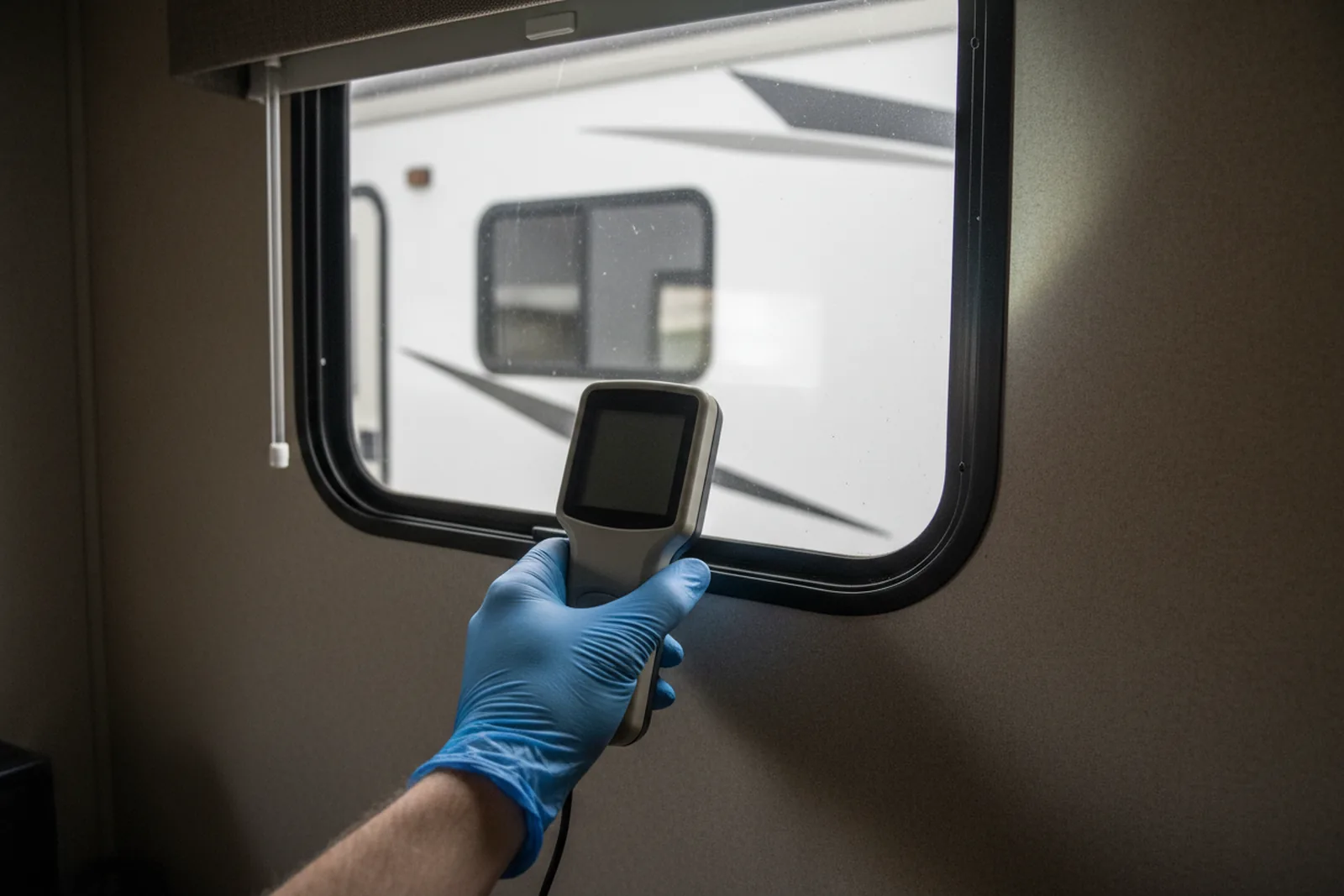
When mobile wins: private sales, storage lots, out-of-town purchases
Private sale is the classic case.
Storage lots are another win. I can test the 12-volt system on the battery, check the roof, run the slide, and flag what needs shore power. If the seller can’t provide power, I test what I can and write down the rest.
Long-distance purchases are the third case. You can hire a mobile RV inspection in the seller’s ZIP code, get the report before you fly out, and avoid that awful drive home with a heater that doesn’t light. I once inspected a Class C in a KOA near Waco for a couple from Michigan. They never saw the rig in person until closing day. The report had 60 photos, and they told me it saved them a five-hour drive and a nervous night. You can’t get that from a shop unless the seller volunteers to trailer it there, and most won’t.
When a shop is worth it: drivetrain, lift, and the big diesel rigs
A motorhome has two houses: the coach and the chassis.
Generators need a load test. I can start it and run the roof airs, but I can’t measure the output under full load. Fluid analysis is another add-on. An oil sample sent to a lab can flag coolant or fuel in the oil. That’s abotu $200 to $300 extra and takes a few days. A shop can draw the sample while it’s on the rack.
I tell diesel buyers to do both: my inspection for the living quarters, a shop for the powertrain. My report flags the stuff that will ruin a trip: roof cracks, soft floors, dead LP detectors. The shop flags the stuff that will ruin an engine: blow-by, worn springs, bad injectors. Some shops even let my inspector watch the lift. Ask.
Seller cooperation: the part nobody warns you about
A shop inspection needs the seller to move the RV.
Even at a dealer, a shop bay may not be independent. They might miss a roof leak, or they might “fix” it with a tube of sealant before you see it. Ive never seen a dealer hide a hot skin, but I’ve seen them roll a rig into the detail bay before my inspection to polish the slide seals and vacuum the vents. Looks don’t change the meter readings.
If you’re scheduling an inspection, confirm three things with the seller before I arrive: the rig has a battery, the tires hold air, and I can get on the roof. If the seller says no, that’s a red flag. If they say yes and then the battery’s dead when I show up, you learn something about how it’s been maintained. I’ll wait while you charge it, but I charge by the hour after the first half-hour.
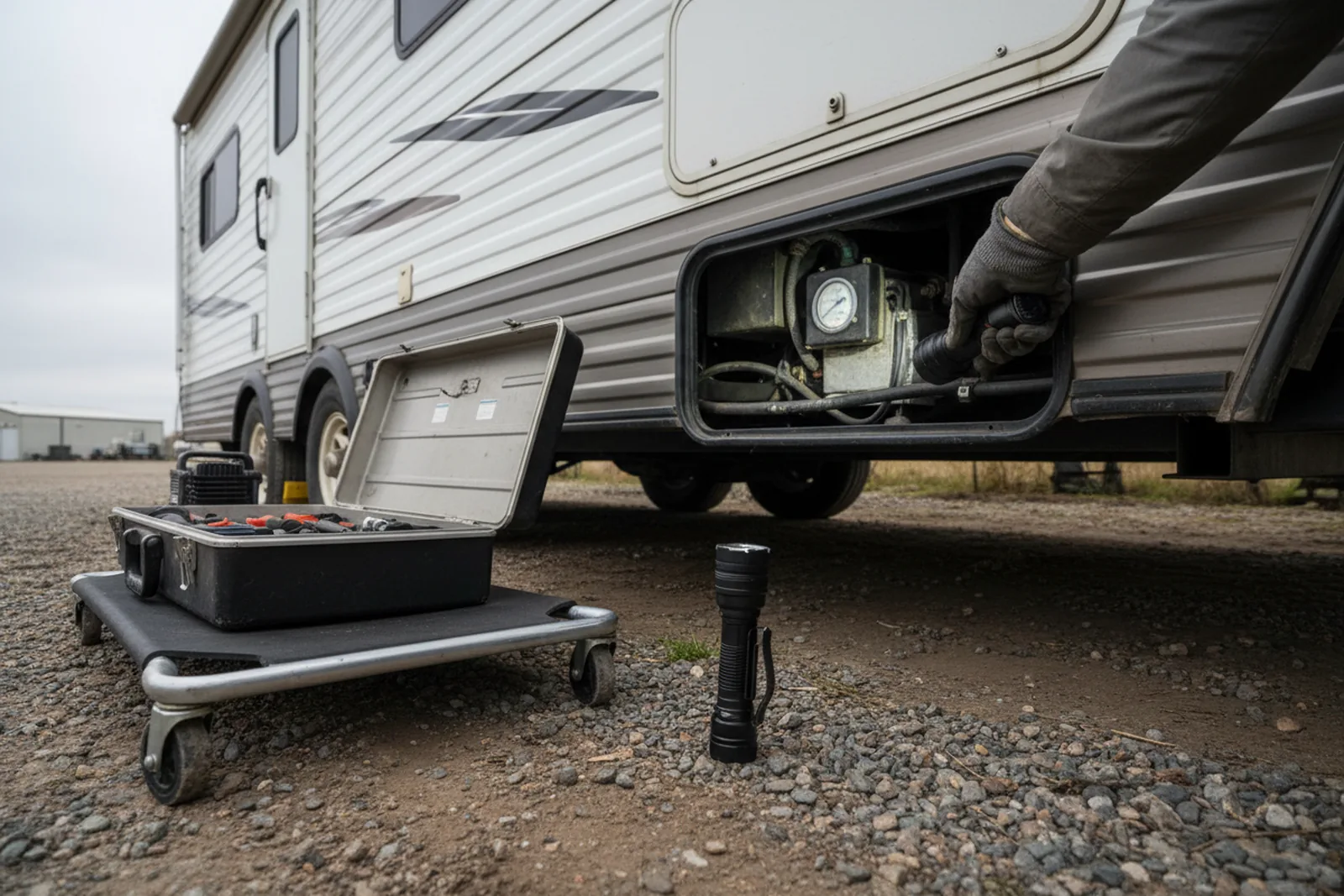
This video shows what can happen when a dealership doesn’t want an independent inspector around.
How to compare a mobile RV inspection quote to a shop bill
It’s apples to oranges, but here’s the reality.
Prices vary by region and inspector. In Fort Worth, I’m less than an inspector in Aspen, becuase my truck payment is lower. Some inspectors add about $100 per 5 years of rig age, but this varies. Some charge a trip fee after 25 to 50 miles. Most charge for fluid analysis separately. Shop bills are simpler: shop rate times hours, parts extra. Neither is “cheap.”
Here’s what I’d do if I were you: get a mobile quote for the RV, get a shop quote for the chassis, and put both in the purchase offer. Ask the seller to split the cost or to fix the high-priority items before close. I also ask for proof of insurance from any inspector you hire: general liability and professional liability. NRVIA-certified inspectors must carry professional liability insurance, and you can ask for proof. If they can’t produce a current certificate, find someone else. I explain credential checks in another post on RV inspector certification explained.
My hard rule after six years of crawling under RVs
I would never buy a used RV without a mobile inspection. Never.
Here’s a small test: go look at any used rig this weekend. Look at the roof. That’s the same spot I’d check for water damage, and you just did it for free. Now imagine what else you can’t see from the ground. That’s why I climb.
Pull up a couple of certified mobile inspectors in your area. Ask to see a sample report. I’d rather you ask me that than find out after the sale. If you’re in central Texas, I might even be the one holding the ladder in your driveway.
Before you book an inspector
FAQ
Is a mobile RV inspection as thorough as a shop inspection?
For the living systems, yes. A mobile inspector follows the NRVIA standards, covering roof, plumbing, propane, electrical, and appliances. A shop adds a lift, so chassis and drivetrain get a deeper mechanical look. The best approach for a motorhome is both: mobile for the house, shop for the engine. The mobile report is usually more detailed because that is all the inspector does all day.
What does a mobile RV inspection cost?
Expect roughly $350 to $800 for most towables, $500 to $1,100 for a gas Class A, and $650 to $1,500 or more for a diesel pusher. Inspectors set their own rates, and distance from there home base adds a trip fee. A detailed report is included in that price. Fluid analysis runs about $200 to $300 extra. Ask for a quote for your exact rig before booking.
Do I need a separate mechanical inspection for a motorhome?
If you're buying a motorhome, especially a diesel pusher or one with high miles, yes. Hire a shop or a mobile mechanic to inspect the chassis, engine, transmission, and suspension. That's not part of most RV standards. The coach inspection catches water damage and bad appliances; the mechanical inspection catches a bad head gasket.
What if the seller won't allow an inspection?
Walk away. A serious seller with a sound rig will usually welcome an inspection. If they insist on their own mechanic at their own shop, remember that mechanic may have a relationship with the seller, not you. An independent mobile inspector works only for the buyer. Refusal to allow even a basic inspection is a big red flag.
Do mobile inspectors need power and water hookups?
To test every system, yes. The seller should provide shore power, a water source, and propane. If that's not possible, the inspector tests what can run on 12-volt and notes the rest as "not tested." That gap is useful for negotiating, but a full inspection is better. If the rig is winterized, the water systems may not be full tested.
How do I verify an RV inspector's credentials and insurance?
Look up the inspector on the NRVIA site's inspector locator. Confirm the certification is current. Ask for a sample report and a certificate of insurance for profesional liability. Any NRVIA-certified inspector must carry insurance. Also ask how long they have been inspecting and how many inspections they have done. Trust but verify.
Find RV inspectors near you
Compare independent RV inspectors in your city, then ask a few for a price before you buy.
Browse by stateOr jump to: Mobile RV inspection · North Pole, AK · Lodi, CA · Bakersfield, CA