RV annual inspection: what a yearly check covers and who does it
By Della Marsh · October 29, 2026
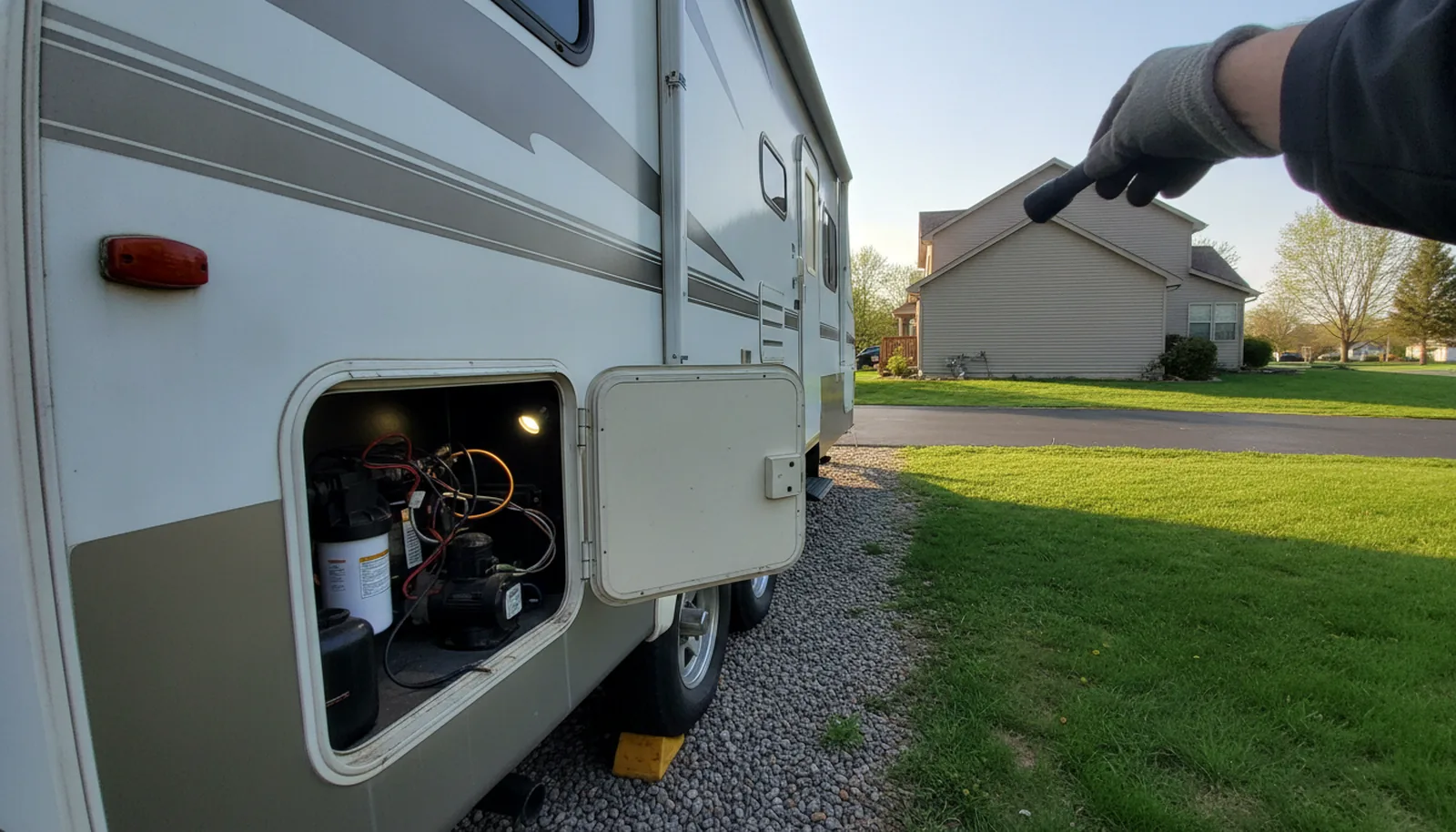
Last March I did the first moisture sweep of the year on my 2017 25-foot travel trailer, part of my own RV annual inspection, similar to what I do for an RV inspection in Oklahoma City. I was in the gravel driveway here in Fort Worth, with a roofing crew ten feet away putting new shingles on the house. Their ladder banged every time the wind picked up. I put the pin meter against the ceiling around the bathroom vent and it read high compared with the wall behind it, which read normal. The Dicor up on that vent had given up sometime between Thanksgiving and February, and the water had been sitting in the roof decking long enough for the numbers to tell on it. If I had waited until April, I would have found it by smell. That’s what a yearly check does: it finds things while they’re still a repair, not a renovation.
An annual RV inspection is the appointment you make with your own rig, like the one you make with a doctor. If you’re in Oklahoma, you can compare RV inspection in Oklahoma City services and see what a yearly visit costs there, or browse a directory of RV inspectors across Oklahoma to find one near you.
Why owners order an annual inspection, beyond the obvious
Safety is the obvious reason. So is catching a small leak before it rots a roof. But there’s a third reason not everyone thinks about: the binder.
The binder with my old inspection reports is a big reason I got my asking price when I sold the trailer in 2024. I told the buyer I never thought twice abotu my cost when it came to any type of RV inspection in Oklahoma City. That wasn’t quite true, but close. He looked over the rig, then looked through the binder: seven years of photos, moisture reads, sealant fixes, tire replacements. Not everything in there was good news. But it was all written down. He said later that the binder closed the deal, not the walkthrough.
If you’re trying to decide wether to do this yourself or hire it out, a list of certified RV inspectors by state and city shows you what’s local. You can also look for mobile RV inspection services that come to your lot or driveway. Many of those same people also do pre purchase RV inspection work, so they know what a neglected rig looks like. When I looked at mobile RV inspection in Oklahoma, I found several inspectors who would drive to a storage lot for a yearly check.
What an annual RV inspection actually covers
The NRVIA Standards of Practice say an inspection is visual and functional, not destructive. The inspector looks at readily accessible areas, runs the systems, and writes down what they find. Some years the binder gets mostly check marks, and I’m glad.
The list for a yearly check should include:
- Roof and every roof penetration: vents, skylights, antennas, the AC gasket, lap sealant around everything.
- Sidewalls, windows, doors, slide-outs, and all exterior seams and sealant. I check for soft spots and sight down the walls for any bowing that might be delamination.
- Moisture readings at every roof opening and every slide corner, with a pinless and a pin meter, each checked against a dry baseline on the same material.
- Propane system: leak-down test at 8 inches of water column for 5 minutes, checking the tank or cylinder date, regulator, hoses, every connection.
- Detectors: the age, the test function, the replacement date for LP, CO, and smoke alarms. Did you check the date on the back of yours? If it says 2018, it’s due.
- Tires and brakes: DOT date codes, tread depth, sidewall cracks, brake lining if the rig has brakes, bearing play, and the breakaway switch.
- Electrical: 120-volt shore power connections, polarity and GFCI tests, converter output, batteries, and a hot-skin test.
- Plumbing: city water and pump pressure, drain valves, tank condition, any leaks.
- Appliances: furnace, water heater, refrigerator, air conditioners with a temperature split for each unit.
- Slide mechanism: alignment, seal compression, motor function, any sound of binding.
I’ve gone over the RV safety inspection items that can actually hurt you if you skip them. Same territory. For the full step-by-step order I use, this RV inspection checklist walks through 15 systems.
What an owner can do well, and what’s worth hiring out
I inspect my own trailer every March. Maybe 60 percent of the work I can do to a decent standard. The other 40 percent needs a second person, or tools I dont care to buy, or just fresh eyes on something I’ve gotten used to seeing.
Here’s how I’d split it:
| Item | Owner | Inspector |
|---|---|---|
| Visual check of roof sealant | Yes | Yes, with photos |
| Moisture meter sweep | Maybe, if you have a meter | Yes, with baseline |
| Propane leak-down test | No, unless trained | Yes, with manometer |
| Detector age and test | Yes | Yes |
| Tire DOT codes and tread | Yes | Yes |
| Brake and bearing check | No | Yes |
| Electrical hot-skin test | Yes, with a multimeter | Yes |
| Slide mechanism check | Partial | Yes, inside and out |
| Appliance function test | Yes | Yes, all appliances |
A basic pinless moisture meter runs about fifty dollars, and an afternoon will teach you to use it. A propane leak-down test is not a DIY thing without a manometer and some training. And a brake inspection means pulling wheels, wich most owners shoudl not do in a storage lot. That’s the part I schedule around.
When to schedule it, and how long it takes
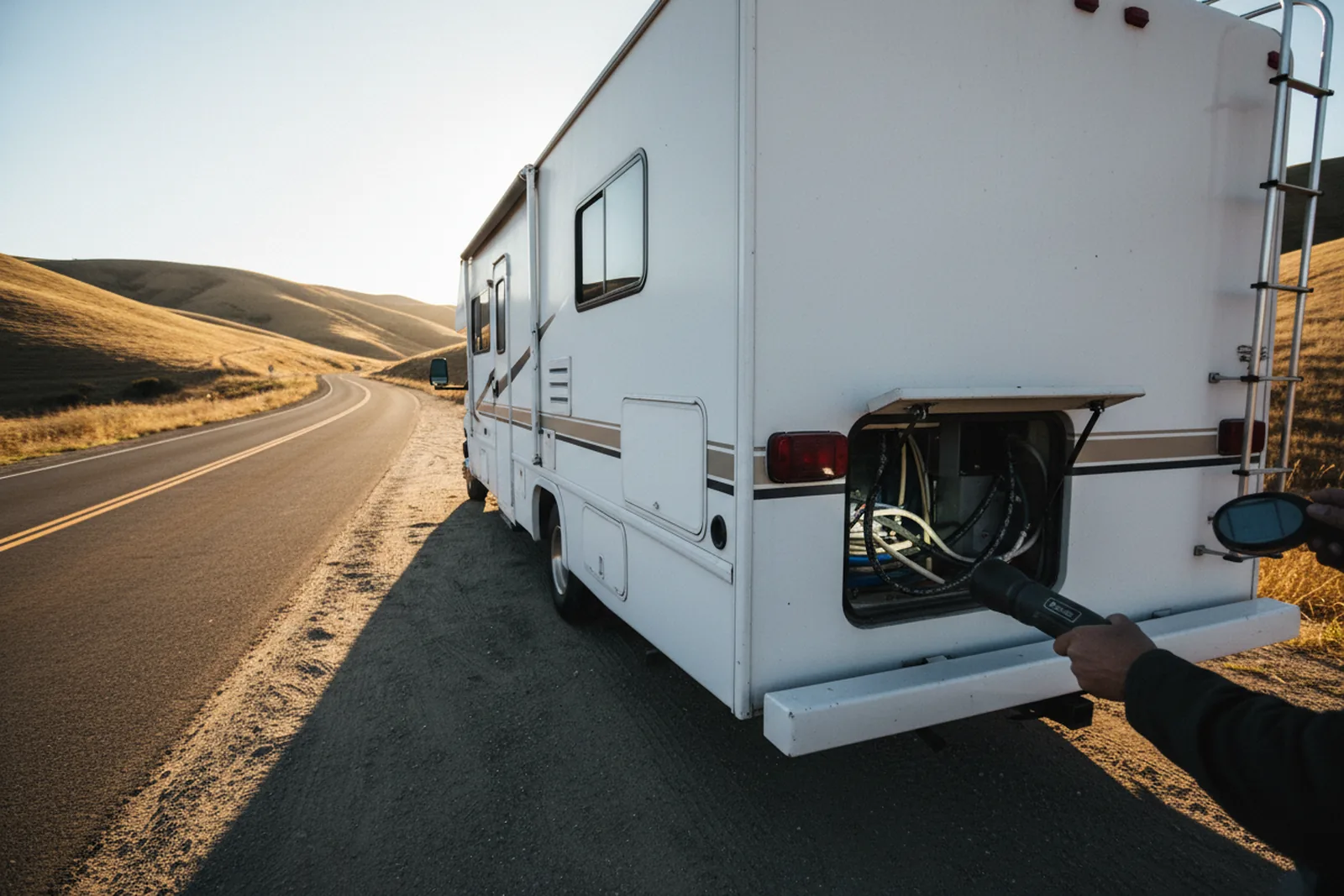
I schedule my own inspection in March, about a month before the first pull of the season. That leaves a couple of weaks to order a tube of sealant or a vent cover, and the weather usually cooperates. The two most useful times are right before the first trip of the year and right after a long storage.
A full yearly inspection on a 25-foot travel trailer usually takes about two to four hours on site, plus a few more hours for the report. A Class A motorhome will eat a full day. Most inspectors deliver a digital report with photos within a day or two, but ask before booking. I print mine and add it to the binder with the older ones, so I can see what changed from one year to the next. That comparison is the whole point.
An annual inspection is not routine maintenance
Routine maintenance is flushing the black tank, airing up the tires, greasing the slide. An inspection don’t fix anything. It finds things. Then the work still has to get done, by you or a mobile tech or a dealership.
The most common finding on my trailer over seven years has been sealant gaps. The roof vents, the antenna base, the clearance lights. Each one was a fifteen-minute fix with a tube of self-leveling sealant. Missed long enough, each one would have become rot.
Second most common was tire age. My 2017 trailer came with tires stamped 2016. By 2022 there were no cracks and plenty of tread, but the DOT code said seven years, so I replaced them. Which brings up what this all costs.
What a yearly visit costs you as an owner
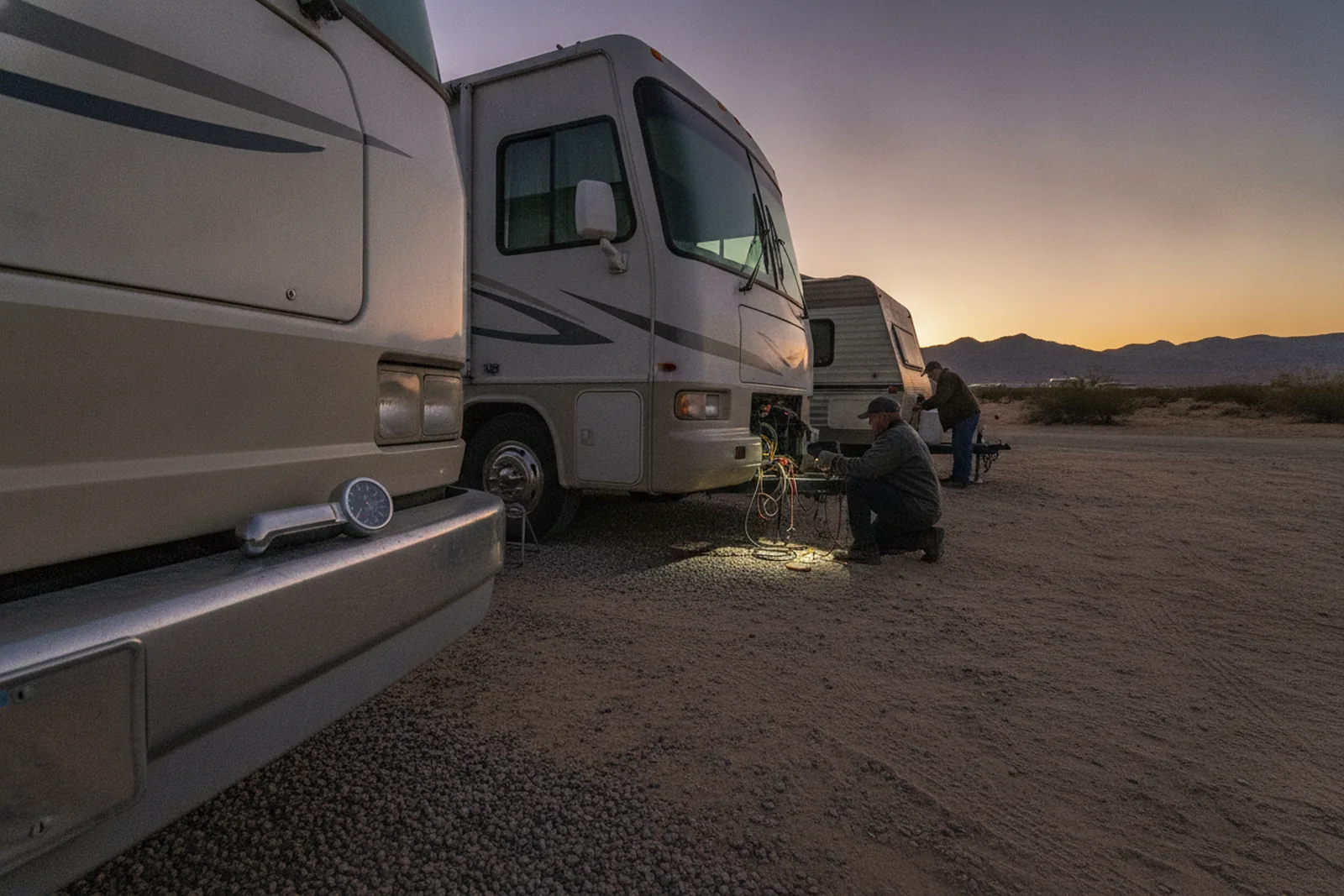
Prices shift by region, rig size, and inspector, but a yearly check on a travel trailer in Texas often runs about $350 to $550, and a motorhome about $500 to $1,100 or more. That covers the site visit and the report. Some inspectors give a repeat-customer discount if you book every year.
Compared to a pre-purchase inspection, the yearly check is shorter and simpler. And cheaper than the repair you’re trying to avoid.
Here’s a video that shows what annual RV maintenance and spring cleaning look like in practice.
The one thing I’d tell any owner about yearly checks
An annual inspection is the cheapest insurance you can buy for a rig you plan to keep. It’s a good idea even if the binder stays boring. Find a roof leak in March and it’s an afternoon with a caulk gun. Find it in July at a campground and it’s a wet mattress and a moldy ceiling.
This weekend, pull up a list of mobile RV inspectors near you, pick two, and ask what their yearly inspection includes and what it costs for your rig. The answers will tell you more than any blog post.
Related reading
FAQ
How often should I get an RV annual inspection?
Once a year is the standard, typically before the first trip of the season or after long storage. If the rig sits outside through weather extremes, spring is best. An annual propane leak test and operating-pressure check are recommended by RV service providers, and the NRVIA standard includes a leak test.
What does an RV annual inspection cost?
For a travel trailer, expect roughly $350 to $550. For a Class A motorhome, roughly $500 to $1,100 or more. Prices vary by inspector, region, and rig size. Some inspectors charge travel fees outside a certain radius. Always ask for a sample report and proof of insurance before booking.
Can I do my own RV annual inspection?
. You can do the visual checks, test the detectors, and use a moisture meter. But you should hire a pro for the propane leak-down test, brake inspection, and anything that requires special tools or experience. I do my own inspection every March, then have a certified inspector double-check the big items.
What is the difference between an annual inspection and a pre-purchase inspection?
A pre-purchase inspection is a detailed, often multi-hour evaluation to decide if a used RV is worth buying. An annual inspection is a shorter, focused check of systems, seals, and safety items on a rig you already own. Both should follow the NRVIA Standards of Practice.
When should I replace my RV's propane detector?
Most LP detectors have a service life of 5 to 7 years, and many have a date printed on the unit. Check the back or the label. If no date is visible, replace it at 5 to 7 years, or follow the manufacturor's guidance. The same goes for CO alarms. Smoke alarms are commonly replaced at 10 years, but check the label.
How old is too old for RV tires?
One major tire maker recommends replacing tires at 10 years from the manufacture date, even if tread remains, while many vehicle makers say 6 years. The DOT date code on the sidewall tells you the week and year. On a heavy rig like a motorhome or fifth wheel, I wouldn't run tires past 7 years, regardless of tread, but that's my own practice, not a rule.
What is a hot-skin test in an RV inspection?
The inspector tests for stray voltage between the RV's metal frame and a known ground. This can happen from a faulty electrical connection. A non-contact voltage tester or a multimeter can detect it. A hot-skin condition can be lethal if your standing on wet ground and touch the rig.
Find RV inspectors near you
Compare independent RV inspectors in your city, then ask a few for a price before you buy.
Browse by stateOr jump to: Miami, FL · Oceanside, CA · Bushnell, FL