RV pre-trip inspection: 14 checks I do before I pull out
By Ernie Takahashi · October 21, 2026
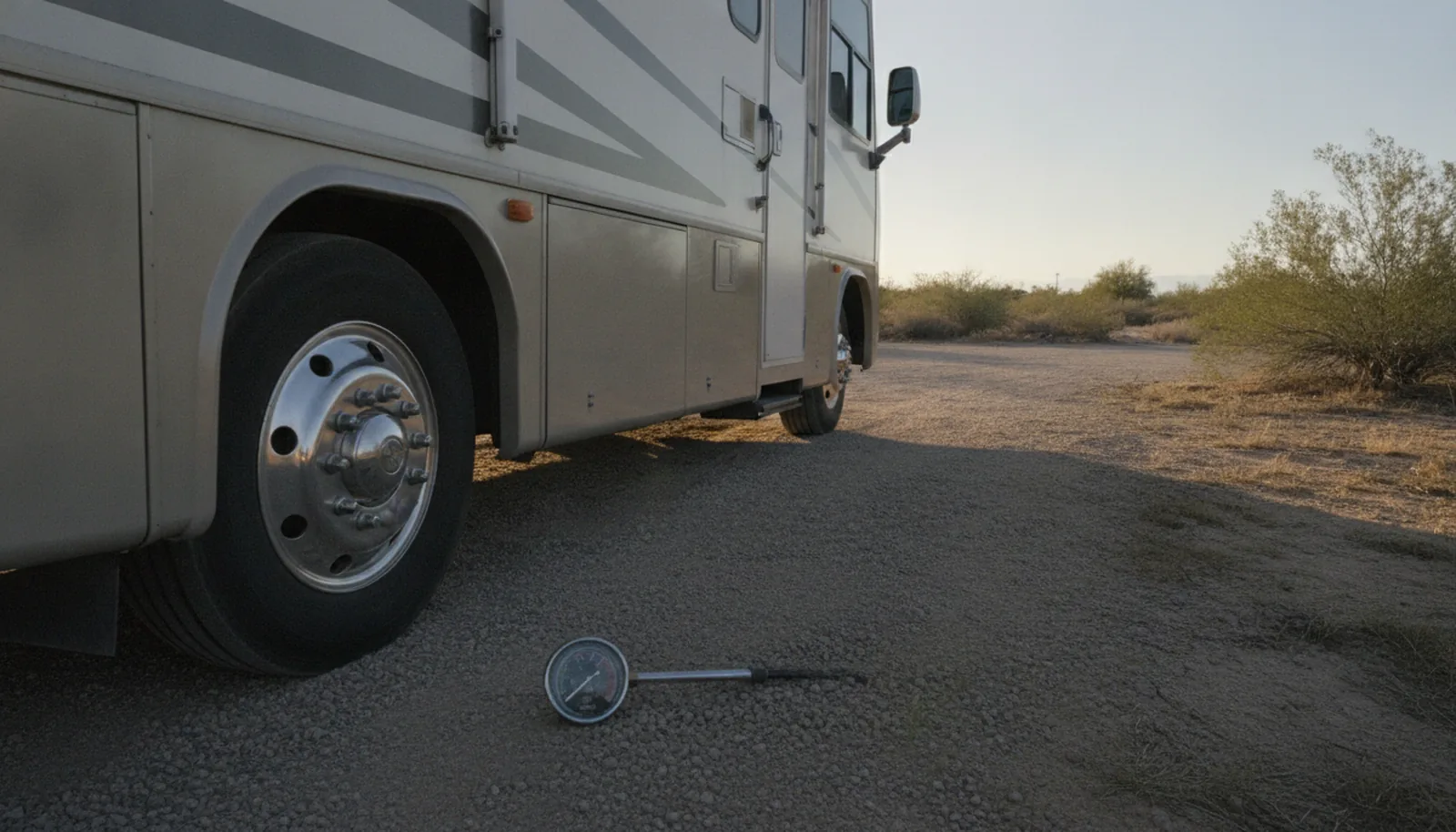
Big Sur, March 2023. I drove my 2012 Class A down Highway 1 for a long weekend, parked at a state campground, and woke up to a soft tire. Not flat, just soft. I’d set the pressure cold three days before, but a cracked valve stem had a slow leak and it was down to 62 psi. That one made me mad at myself, because I know better. A pre-trip inspection isn’t something you do once and then forget. It’s a circle check, same one I did every morning on 116 school buses for twenty-six years. Walk the whole rig, touch things, look for what changed overnight. If you want a local set of eyes on your rig before a long trip, there are mobile RV inspectors in Bakersfield who will come to your driveway and run a lot more than these fourteen checks.
Ive since written my own 14-point list and I run it befor every pull-out.
1. Tires: pressure, date codes, and the coin test
Check tire pressure cold, before the sun hits the sidewalls or you’ve driven a mile.
Every tire has a DOT date code, the last four digits of the longer DOT string. ‘1018’ means the tenth week of 2018. RV tires age out before they wear out. Ive seen a tire that was past the 10-year age guidance with good tread throw its tread at 65 mph in the Central Valley heat. Not pretty.
2. Lug nuts: torque them, don’t trust the last guy
Wheels come off when lug nuts loosen.
I once saw a fifth wheel lose a wheel on Highway 58 because the owner had hand-tightened the nuts after a tire change. Cost him a new axle and two days in Mojave.
3. Lights and turn signals: plug in and walk around
Every pre-trip, I plug in the umbilical and turn on the headlights, left turn, right turn, brake lights, and four-ways.
On my old travel trailer, I learned to jiggle the 7-pin connector and watch the lights flicker. A little dielectric grease in the plug fixed a lot. I also climb up and check the marker lights on the roof. They tell the driver behind you how tall you are.
4. Brakes and brake controller on any trailer
If I’m towing, I test the trailer brakes before I leave the driveway.
A major axle maker says to test brakes and the breakaway system before every trip, and adjust brakes evry 3 months or 3,000 miles if they’re not self-adjusting. I’ve felt a trailer push the truck through a stop sign because the gain was too low.
5. Breakaway switch on a travel trailer or fifth wheel
The breakaway switch is a small plastic pin in a box on the trailer tongue.
I test mine every trip. I’ve found a dead breakaway battery on a friend’s toy hauler; he’d never tested it. If the trailer ever gets away, you want those brakes to stop it before it hits a minivan.
6. Hitch, safety chains, and the kingpin lock on a fifth wheel
I hook up, then I get on my knees and and look at the hitch.
I once saw a ball mount come out of a receiver because the hitch pin was missing. The owner had forgotten to put it in. The trailer tongue hit the pavement and the safety chains held, but it ruined the A-frame.
7. Motorhome fluids: oil, coolant, transmission, and the dipstick
Lift the engine cover or open the hood, and check the oil with the engine cold or after it’s sat for ten minutes.
Check the coolant overflow tank. Transmission fluid on a Class A gas chassis is checked warm, engine running, on level ground. I’ve had a transmission overheat on a long climb becuase the fluid was a quart low.
For a visual walkthrough of these checks, I often point people to this video.
8. Belts and hoses: squeeze, twist, and look for cracks
Under the hood, I grab the serpentine belt and twist it.
Heater hoses and radiator hoses rot from the inside. Squeeze them. Look for bulges, especially near the clamps. I once bought a 2004 travel trailer with a coolant hose that looked fine until I touched it and my thumb went through.
I replace belts and hoses on my Class A on a schedule based on condition and mileage, not when they break.
9. Propane: off or secured, and detectors actually work
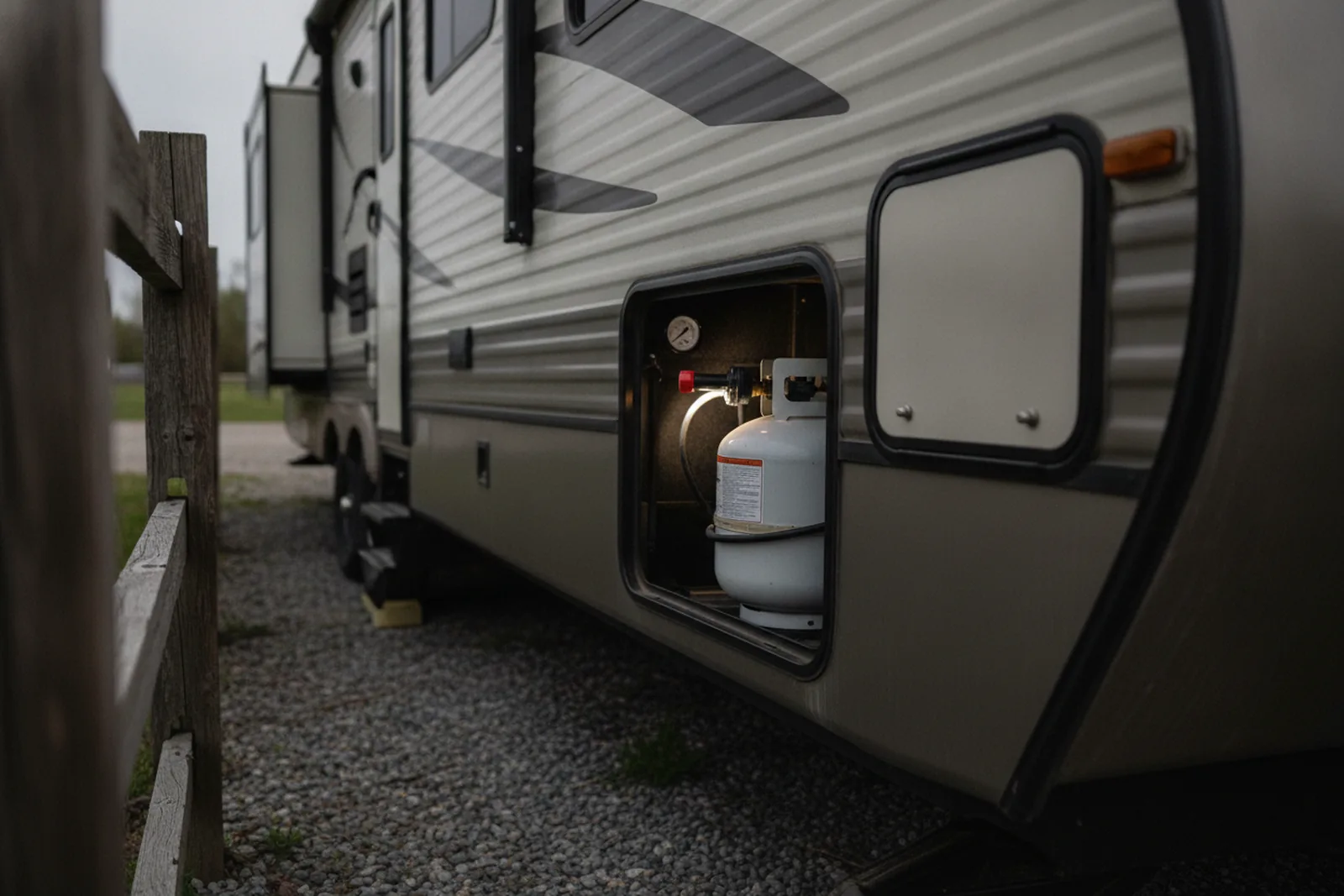
Before I pull out, I make sure the propane tank valve is closed if I’m not running the fridge on propane.
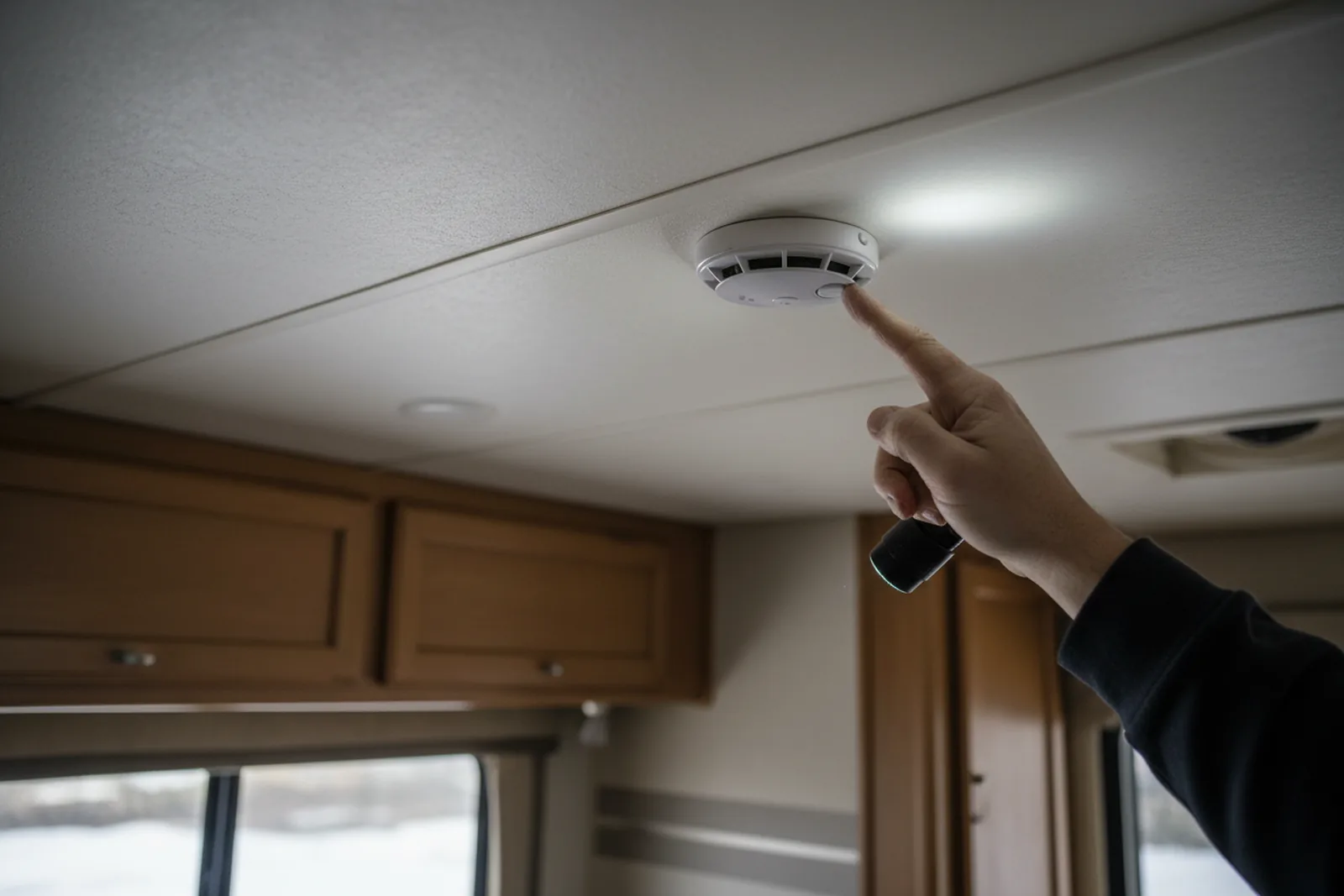
I also test the propane leak detector and the carbon monoxide alarm. I once found a dead CO detector in a used motorhome I inspected; the owner thought it worked because the little green light was on.
10. Slide-outs and awnings: stowed, locked, and latched
Before I turn the key, I walk around and look up.
Awnings are worse. A patio awning that unrolls at 60 mph will tear off and hit the car behind you. I never leave an awning out overnight, even in calm weather. I also check the awning arms are locked and the travel locks are engaged.
11. Roof items: antennas, vents, and the stuff up top
I get on the roof at least once a month, not just before a trip.
Before climbing, I check the ladder rungs are tight. I’m 64, and a fall off a roof is worse than a leak.
12. Battery charge and the converter
I start the engine and watch the volt gauge on the dashboard.
I also test the converter by plugging into shore power or running the generator. The house lights should stay bright and the battery monitor should show charging voltage.
A dead house battery on a dry camping trip means no water pump and no lights. I replace my house batteries when they no longer hold a charge, wich for me has been around every 4 to 5 years.
13. Interior items: secure the coffee maker and the TV
Before I pull out, I do a walk-through of the inside.
I also check the refrigerator door latch. If it opens on a curve, you’ll have eggs and orange juice all over the floor. I add a simple strap to the fridge door.
Anything on the counter goes on the floor or in a drawer. The first time I forgot, I left a cast iron skillet on the stove. It ended up in the driver’s seat.
14. Final walk-around: look, listen, and smell
I take one last lap around the whole rig, counterclockwise.
I start the engine and listen. A sweet smell is coolant, a rotten egg smell is the catalytic converter or the house battery boiling.
Then I get in, adjust the mirrors, and pull out slowly. I hit the brakes once in the driveway to make sure the coach stops straight. It costs me five minutes now or five hundred dollars later.
14. What a quick pre-trip can’t catch, and why a full RV pre-trip inspection matters
The pre-trip is a morning routine, not a full inspection. If you’re due, or if you just bought a used rig, pull up RV inspectors in California and ask two of them what their report includes and what it costs for your rig.
My other posts go deeper on what a yearly check should cover and the safety items you can’t skip. Then run it like I do, every time, even if you only drove to the dump station and back.
Keep reading
FAQ
What is an RV pre-trip inspection?
An RV pre-trip inspection is a walk-around and check of critical systems before you pull out: tires, lights, brakes, hitch, fluids, propane, slides, awnings, batteries, and interior items. It takes 15 to 30 minutes and prevents most breakdowns and safety issues on the road. I base my list on the circle checks I did on school buses for 26 years.
How much does a professional RV pre-trip inspection cost?
A professional mobile inspection is a lot more thorough than a pre-trip checklist. Typical prices for an independent RV inspection range from about $350 for a small travel trailer to $1,500 or more for a large diesel pusher, depending on the rig and the inspector. That's worth it before a purchase, but my 14-step pre-trip is free and I do it before every drive.
How do I check tire date codes on an RV?
Look for the letters 'DOT' on the sidewall. The last four digits after that are the week and year the tire was made. For example, '1018' means the 10th week of 2018. Replace RV tires before they are 7 to 10 years old, even if the tread is good, because aging rubber fails unexpectedly. Check your spare too.
Can I travel with propane on in an RV?
Traveling with propane tanks on is generally allowed, but many RVers turn off the gas flow and all propane appliances at fuel stops and while driving through tunnels; check the rules for any tunnels on your route. I keep my tanks off while driving to reduce fire risk. If you run the refrigerator on propane, shut it off before refueling and turn it back on after your done.
How often should I test the breakaway switch on a travel trailer?
Test the breakaway switch before every trip. Chock the trailer wheels, pull the pin, and the trailer brakes shoudl engage. Push the pin back in. This verifies the switch and the breakaway battery are working. Replace the small breakaway battery according to the manufacturer's schedule or if the brakes don't energize during the test.
What should I check on an RV before a long trip?
For a long trip, do a full pre-trip: tires cold and date codes, torque lug nuts, lights, brakes, hitch, engine fluids, belts and hoses, propane off and detectors working, slides and awnings locked, roof items secured, battery charge, and interior items stowed. If it's been a year since a professional looked at it, book a mobile RV inspection in your area.
Find RV inspectors near you
Compare independent RV inspectors in your city, then ask a few for a price before you buy.
Browse by stateOr jump to: Miami, FL · Oceanside, CA · Bushnell, FL