RV 12 Point Inspection: What It Covers and What It Skips
By Ernie Takahashi · November 1, 2026
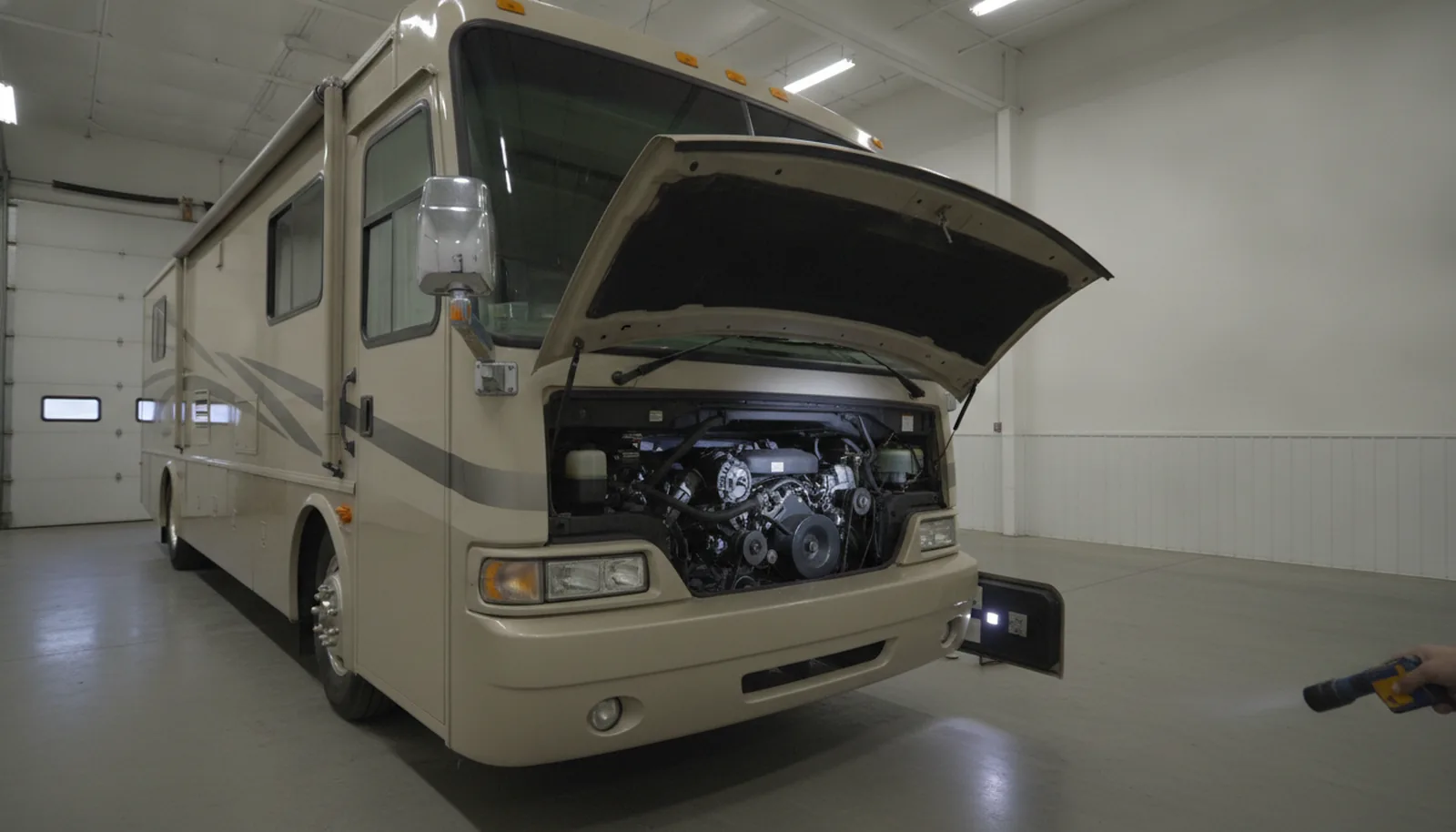
Last July I was parked at the Bakersfield RV Resort, 104 degrees in the shade, watching a guy in flip-flops wave a tire gauge at a 2005 Monaco and tell the buyer the coach was ‘solid.’ He charged about ninety bucks for that. If you’re shopping in Arizona, you can find better RV inspectors in Arizona who won’t do that. That’s when I started calling these quick checks ‘walk-around theater.’ A real RV inspection in Surprise taught me the difference between a glance and a look.
A 12-point inspection is closer to the glance. It’s not even close to the annual teardown at the fleet shop where we pulled brake drums and measured linings. A mobile RV inspection can come to your location, but it’s still not a teardown.
What an RV 12-point inspection actually includes
Most shops and mobile techs won’t hand you a written list of the 12 points, so you have to ask.
On a motorhome the list might add generator start and air conditioner operation, but that’s still a quick check with a clipboard. When I compared prices for a mobile RV inspection in Arizona versus a shop’s 12-point special, the shop was cheaper but the scope was a fraction of what an independent inspector does.
If you’re going to pay for a quick check, make them show you what they’re actualy doing. I know one owner who asked for a 12-point and got back a sheet with tire tread depths written down to the 32nd of an inch, and another who got a greasy thumbprint on a work order.
Which is why a full pre purchase RV inspection takes four to eight hours instead of forty-five minutes. When I compare, I start with certified RV inspectors by state and city.
What the quick multi-point checks skip
The short check almost always skips the roof, and that’s the one that can cost you the kitchen ceiling.
My 2012 Class A gas motorhome has a roof membrane I can see from my folding ladder.
Here’s what the short check almost always skips:
- Moisture readings with a pinless meter, compared against a known-dry spot of the same wall
- A propane leak-down test at 8 inches of water column held for five minutes
- Slide mechanisms extended and retracted, checking wipe seals and alignment
- The roof, including seams, sealant, vents, and air conditioner shroud
- Running every system under power: water pump pressure, holding tank valves, all receptacles with a polarity tester
- A written photo report with itemized findings
A few of those things you can do yourself with a $20 polarity tester and a $40 manometer, but most owners won’t. My RV inspection checklist goes into the full list of systems a good inspector goes thru, but the short answer is that a 12-point is not the same checklist.
When I was maintaining diesel buses, the shop had a daily inspection form and an annual inspection form, they were different documents for a reason. Same thing here, which is why the side-by-side below matters.
Quick check or full inspection: a side-by-side
Here’s what a typical 12-point covers versus a full standards-based RV inspection, based on my work and what I’ve seen from certified inspectors.
| Item | 12-point quick check | Full independent inspection |
|---|---|---|
| Tires | Pressure, tread depth | Pressure, depth, DOT date code, sidewall cracks, age guidance |
| Lights | Function check | Function plus lens condition, wiring, marker lights, brake controller output on towables |
| Fluids (motorized) | Dipstick level | Level, color, smell, possible lab sample for oil/coolant analysis |
| Batteries | Voltage, terminal corrosion | Voltage under load, specific gravity or conductance test, cable condition |
| Propane | Tank presence | Leak-down test at 8” WC for 5 minutes, regulator pressure, detector operation |
| Roof | Usually skipped | Walked, seams probed, sealant condition, membrane tears |
| Slides | Usually skipped | Extended and retracted, seal condition, topper operation |
| Appliances | Fridge cools? AC blows cold? | Fridge on electric and LP, AC Delta T measured, furnace cycle, water heater on gas and electric |
| Report | A checkmark sheet | Written, photo-documented report with findings and recommendations |
So for a low price you get a clipboard and a quick walk-around. For a few hundred to over a thousand dollars depending on the rig, you get the roof walked and the systems tested.
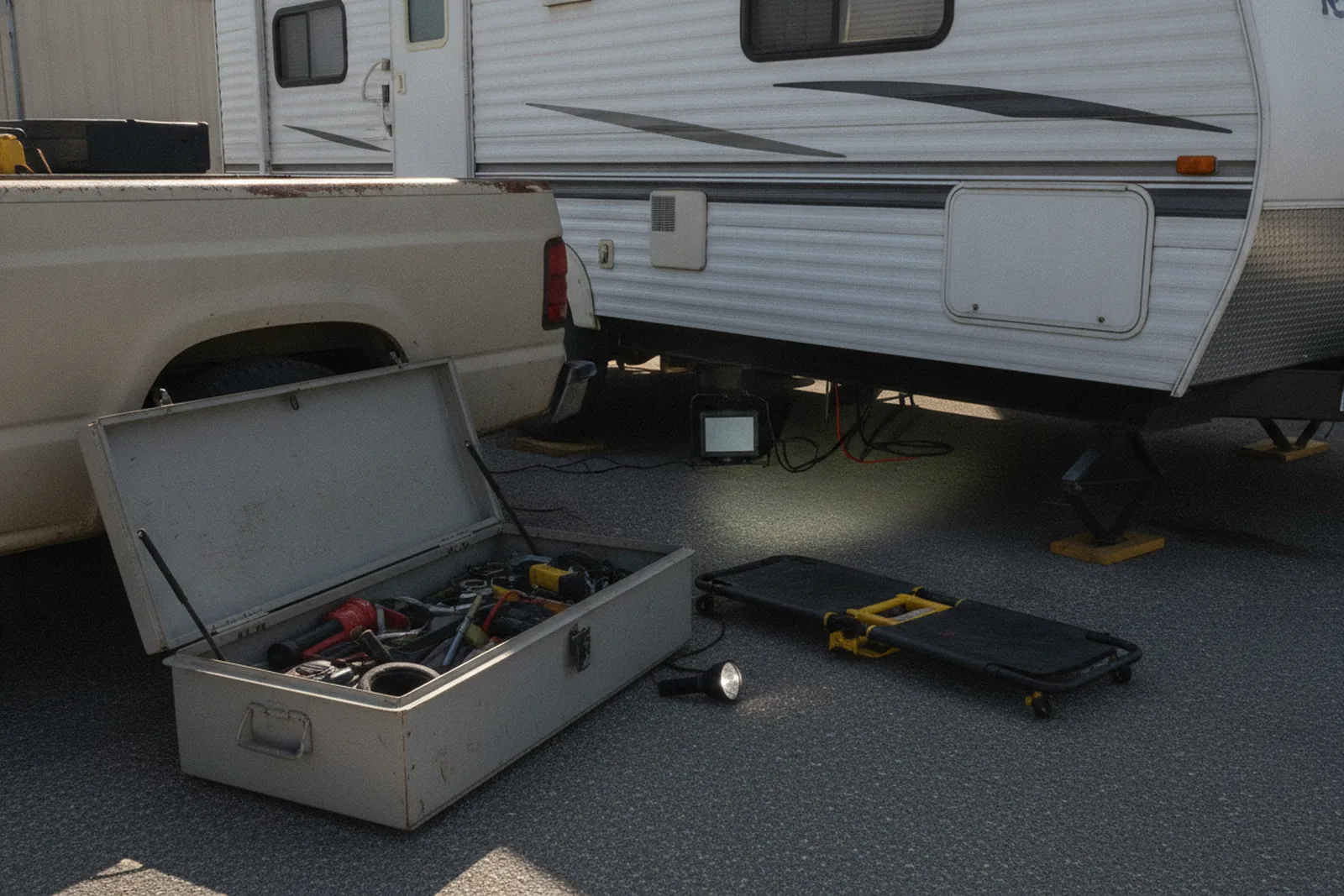
Who should pay for a 12-point, and who should not
If you’ve owned your rig for five years and you know it’s got a slow slide leak and the water pump cycles when it shouldn’t, a spring 12-point at a local shop is a cheap way to have a second set of eyes on the tires and brakes befor the season.
But if you’re standing on a dealer lot with a check in your pocket, a 12-point is nowhere near enough. The certified RV inspectors directory is the place to find one, not the service department’s ‘multi-point special.’
And a 12-point is definitely not enough for any rig that’s been sitting more than six months. Sitting rigs rot in specific ways. Rodents, stuck valves, seals drying out.
When the diffrence between a 12-point and a full inspection is a few hundred dollars on a typical RV purchase, the full inspection is the better gamble. And it’s a gamble you’re already making, because the seller’s ‘free inspection’ isn’t free.
Why the selling dealer’s ‘free inspection’ is a sales tool
A dealer’s ‘free 12-point inspection’ is usually a way to get your RV in the service bay, find a list of recommended work, and hand you an estimate.
I spent 26 years in a public fleet shop where the mechanics had no incentive to sell you anything. You got a straight reading on a brake micrometer and a repair order. It’s a loss leader for the service department.
A slide that has not been run in and out under load has not been checked. A water heater that has not been fired on both LP and electric has not been verified. That’s just what those words mean.
I’ve rarely seen a dealer 12-point include a leak-down test or a Delta T measurement on the air conditioners. So I stopped asking and started doing it myself.
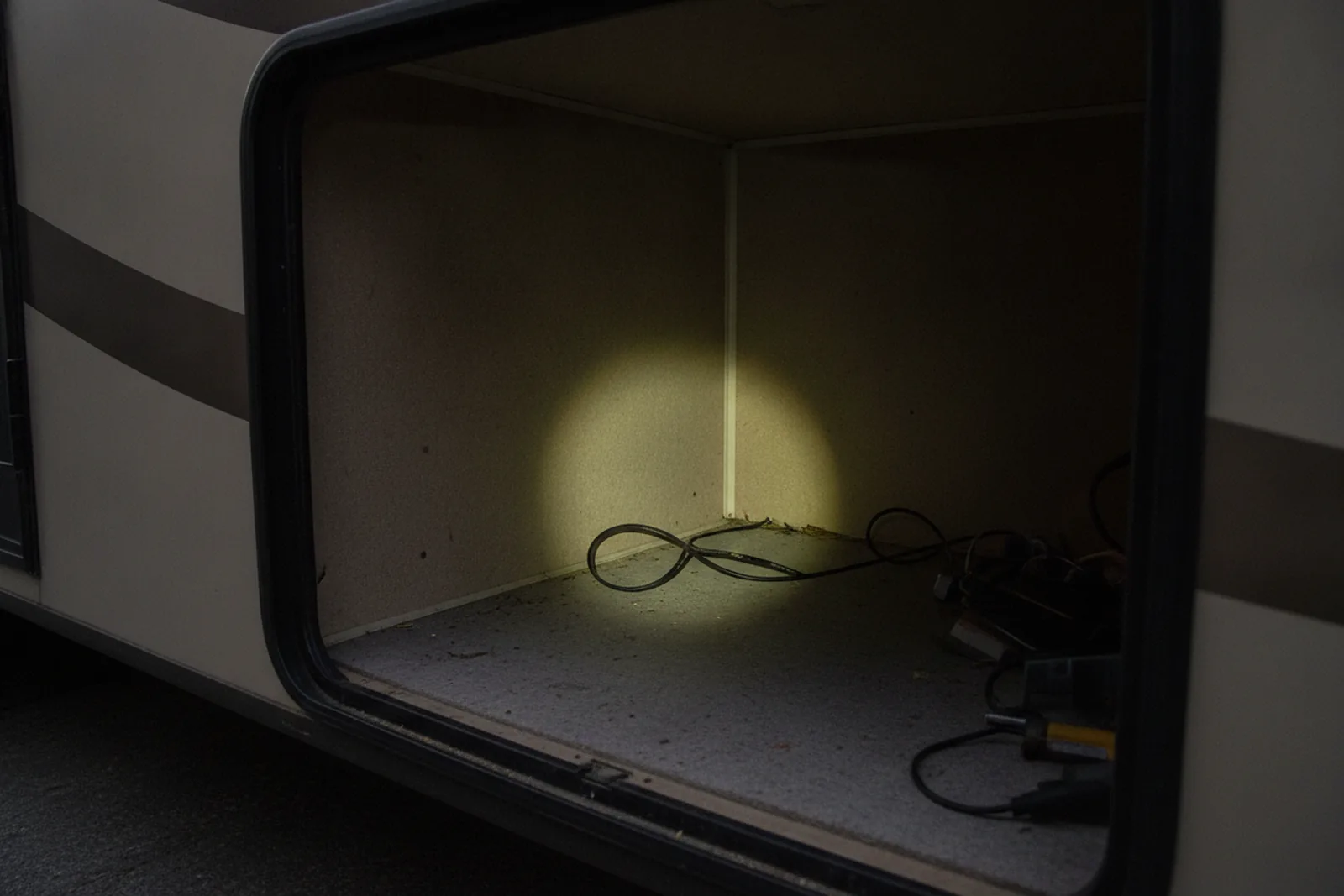
How I do my own seasonal walk-around
Every March I spend two hours on my motorhome doing what I call a ‘rural mechanic’s 20-point.’ If its 90 degrees already, I start at six in the morning with coffee. And it’s more than any shop special.
Then I kneel down and look at the tires. My tires are four years old this year, made in the 22nd week of 2021, and the tread is still good. When they hit six years old I’ll start thinking about replacement even if the tread is still good, because many RV owners replace tires by age rather than tread.
I also turn every dump valve, run the water pump until it shuts off and watch for short-cycling, and light every burner on the cooktop. The furnace gets run for one cycle with the thermostat set to 75 so the fan kicks on. Takes ten minutes and tells me the sail switch and the burner both still work.
The best part of doing it yourself is you learn what’s normal for your rig, so when something sounds different you notice it. That’s saved me more times than any gauge. It’s also why I now recommend a different kind of inspection for buyers.
Where to get a real inspection instead
When I bought my first travel trailer in 2004, I didn’t know independent RV inspectors existed. I kicked a lot of tires and believed a lot of sellers. Cost me.
Now I tell buyers to find a certified inspector before they find the RV. An NRVIA-certified inspector has to work from a written Standards of Practice that tells them to check specific things in specific ways, like holding the LP system at 8 inches of water column for five minutes and recording the AC temperature split.
You can search a directory of certified RV inspectors by state and city and most will give you a free quote over the phone. The cost varies by inspector and rig, but expect a few hours of on-site time plus a written report with photos.
For buyers, there’s no substitute for a pre purchase RV inspection from someone who wasn’t present when the seller cleaned it up. When you’re comparing inspectors, also compare mobile RV inspection options across Arizona because a mobile inspector can meet you at the storage yard or the seller’s house, and you don’t have to move the rig before the deal closes.
I watched this video on RV inspector secrets and it saved me from a few rookie mistakes on my own rig.
A $90 wave of a tire gauge won’t catch a $4,000 roof job
I’ll say it flat: a 12-point inspection on a rig you’re buying is a false economy. You might save $400 today and pay $4,000 in six months when the roof leak shows up in the bedroom ceiling.
If you want a real test this weekend, go out to your own RV and find the DOT date code on you’re tires. It’s the last four digits of the tire identification number, and the first two are the week, the the last two are the year.
Next step: pull up a couple of certified or mobile RV inspectors near you and ask them two things: what does your full inspection include, and what does it cost for my exact rig, sitting where it sits. Then ask the shop offering a 12-point the same two questions.
Keep reading
FAQ
What is included in a typical RV 12-point inspection?
Most shops check tires, lights, fluid levels, battery condition, and a few appliances like the fridge and generator start. It's a quick glance, not a test. A full inspection goes further: roof, propane leak-down, slides, moisture readings, and loads the electrical system. Ask the shop for a written list before agreeing.
How much does a 12-point RV inspection cost?
Prices vary, but a low-cost quick check is common at dealerships and some mobile techs. Some offer it free as a loss leader for service work. A full independent inspection runs several hundred to over a thousand dollars depending on the rig. The 12-point is cheaper becuase it covers less than half the systems.
Is a 12-point inspection enough when buying a used RV?
No. A 12-point misses roof leaks, propane system integrity, slide operation under load, and hidden moisture. When you're spending tens of thousands, pay for a certified inspector who follows a written standard and gives you a photo report. Consider the 12-point useful only for a quick check on a rig you already own and know well.
What does a full RV inspection include that a quick check doesn't?
A full inspection includes a roof walk and sealant inspection, moisture meter readings on walls and floors, a propane leak-down test at 8 inches of water column for five minutes, slide extension and retraction, AC temperature differential, water pump pressure test, and a written report with photos of findings.
Do RV dealers offer 12-point inspections for free?
Some do, especially if they think it will lead to service work. The catch is the tech may be doing a sales inspection, not a safety inspection. Ask what is tested versus looked at, and get the findings in writing. If they won't give you a copy of the checklist, that tells you something.
How long does a full RV inspection take?
A small travel trailer can take 2 to 4 hours, a mid-size motorhome 6 to 8 hours, and a large diesel pusher 8 hours or more, plus report writing time off site. A 12-point can be done in under an hour, wich is one reason it's cheap. You're paying for the inspector's time on the roof with a flashlight.
Find RV inspectors near you
Compare independent RV inspectors in your city, then ask a few for a price before you buy.
Browse by stateOr jump to: Yuma, AZ · Foley, AL · West Palm Beach, FL