Pre purchase RV inspection: what it covers and how to book
By Bree Calloway · October 21, 2026
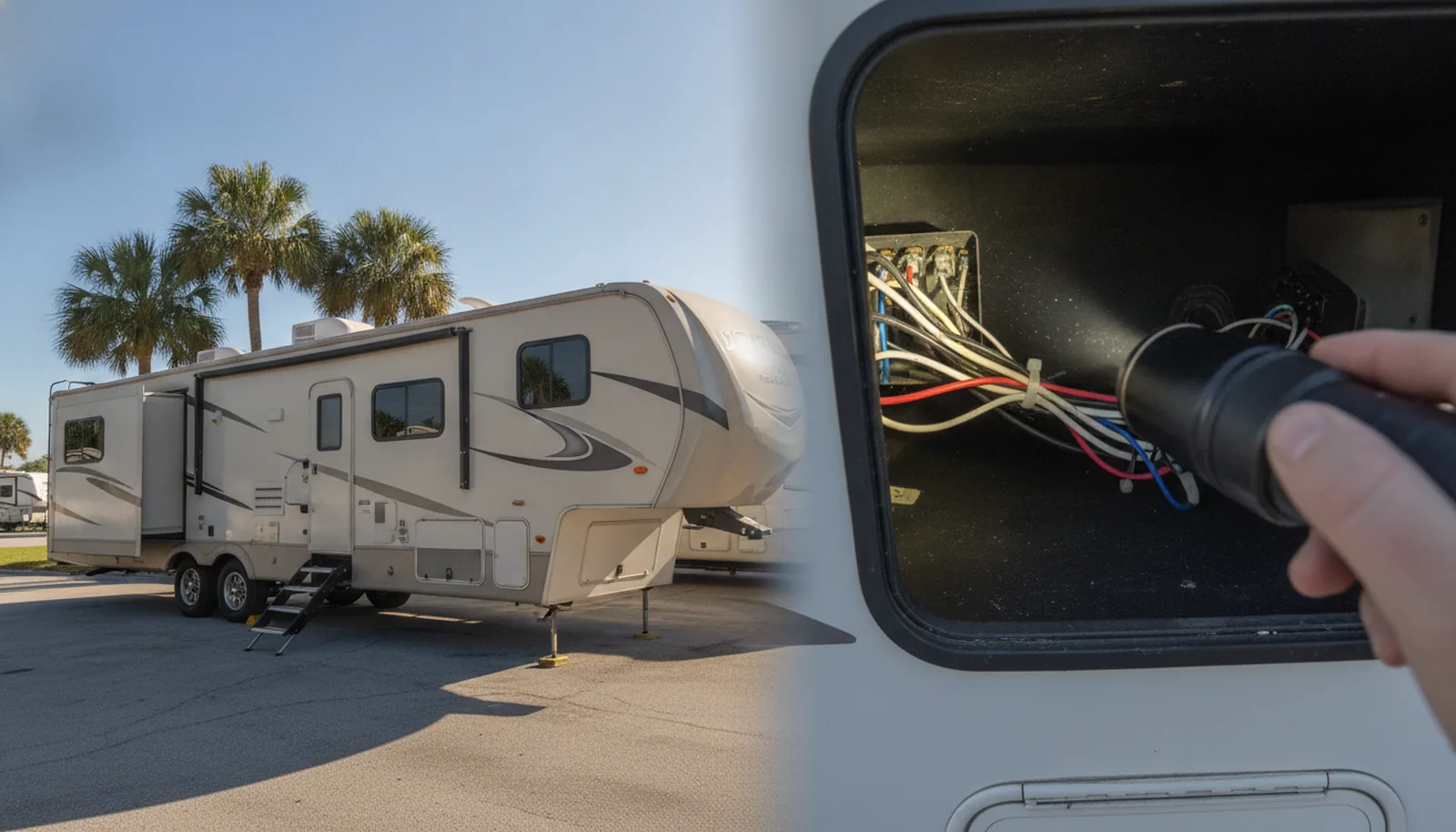
On a sticky August morning in 2020, I stood in a dealer lot off I-75 near Sarasota glaring at my new Class C, wishing I’d hired one of the pre-purchase RV inspectors in Clearwater. It was 9 a.m. And already 88 degrees. My inspector had been there since 7, testing the roof and coaxing the generator to life. The dealer wanted the lot clear by noon. I’d signed a price contingent on inspection, and the clock was ticking.
That inspection found two problems: a hot-skin voltage at the shore plug and a refrigerator that wouldn’t stay lit on propane. Total fix? $340.
When to book your pre purchase RV inspection
Book it after you’ve agreed on a price, but before any money changes hands that you can’t get back.
The wording varies by state and seller, so ask the dealer or a title company for a local sample. The pre-purchase RV inspectors nationwide list can help you find someone near the rig, especially if it’s out of state.
Coordinate with the seller before the inspector arrives. If it’s winter, it needs de-winterized or the plumbing can’t be tested. My inspector asked for that on the phone, but the dealer still had the water heater bypassed and an empty propane tank.
That cost me two hours. I learned to write the setup list into the purchase agreement, and I now use a pre purchase RV inspection checklist to confirm the 12 key items before I sign. Which brings me to the real obstacle: the seller.
How to coordinate with a dealer or private seller
Dealers are the hardest part.
When the dealer for my Class C balked at the time on the lot, I asked him to check with his insurance.
If a dealer still refuses, you have options. Or, if its a new rig under warranty, inspect it before the factory warranty ends and hand the dealer a a list, as the NRVIA suggests. A friend kept the door open that way on a new fifth wheel with a soft floor panel.
Private sellers are usually easier, but you still need power and access. One seller met my inspector at a storage yard with no shore outlet. The inspector brought a generator and a full propane tank. It ran the AC for 40 minutes, and the temperature split was weak on the rear unit, which he noted as a possable issue.
That negotiation saved the buyer $900. But the money only matters if you know what the inspector is actually looking at.
What a certified inspector actually checks
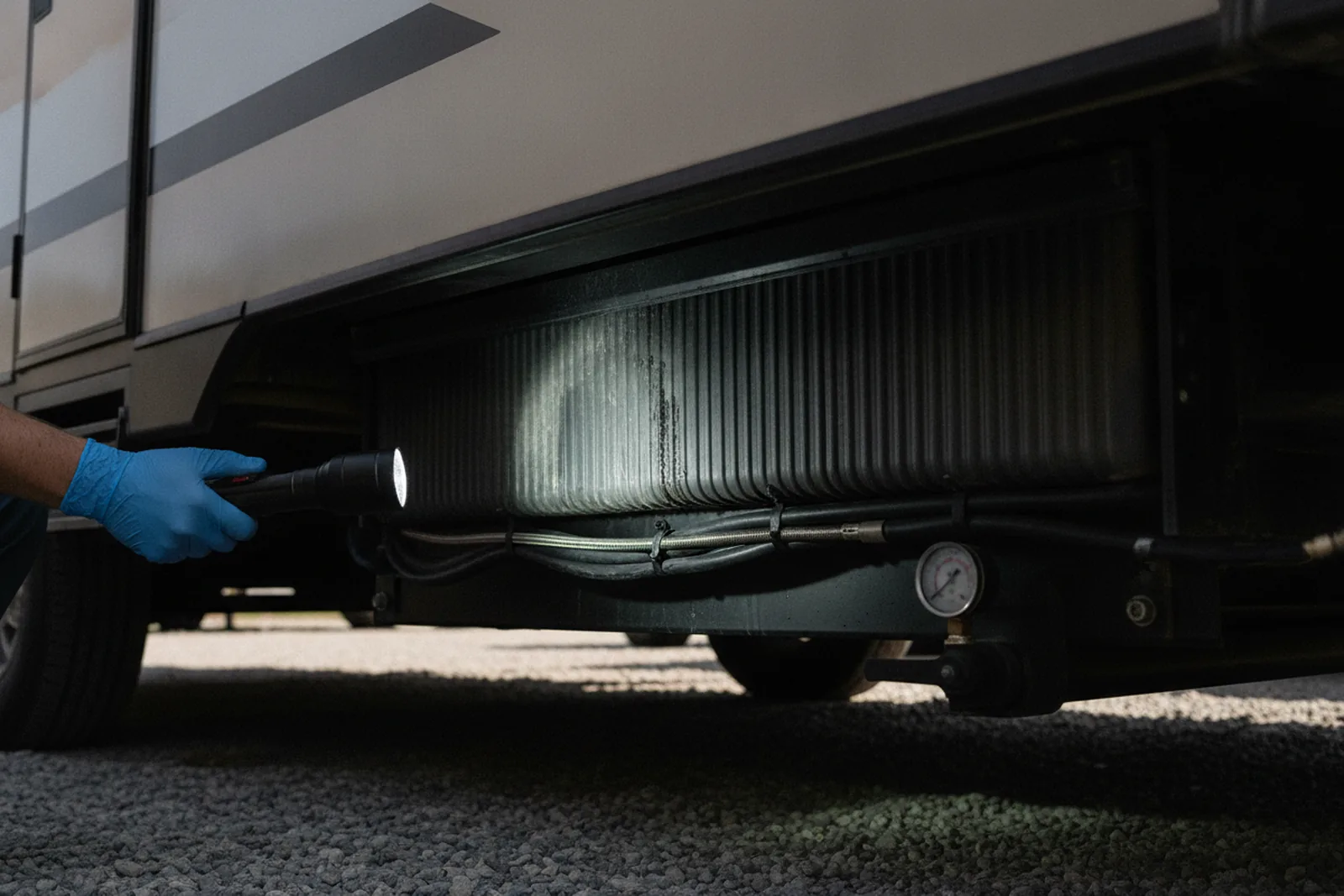
The inspector follows the NRVIA Standards of Practice, which is visual and functional.
For a motorhome, the big systems are:
- Roof, sidewalls, windows, doors, storage compartments, awnings, slide-outs, chassis, frame, steps, lights
- Electrical: 12-volt chassis and house, 120-volt house and pedestal, inverter, generator, hot-skin, GFCI, polarity
- Plumbing: city water, pump pressure, black and gray tanks, drains
- Propane: tanks, hoses, regulators, leak-down test, DOT cylinder dates
- Appliances: fridge, water heater, furnace, cooktop, oven, ACs with Delta T, microwave, washer/dryer
- Interior: ceilings, walls, floors, cabinets, furniture, entertainment
- Motorhome extras: cockpit, engine compartment, exhaust, backup cameras
For a towable, the inspector also checks the hitch, kingpin or coupler, leaf springs, equalizers, shackles, wheel bearings, brakes and breakaway switch.
Moisture matters. The inspector also sights down the sidewalls for delamination bubbles. All of that takes time, and the report takes even longer.
I found this video that shows what a real RV inspection looks like and why it matters before you commit.
How long it takes and what to expect in the report
For my 30-foot Class C, the on-site inspection took about six hours.
My report was 46 pages with photos.
The report has findings based on the inspector’s judgment, not guarantees. The Safety items are the ones that can kill you. Mine were the hot-skin and the refrigerator propane issue. The hot-skin was a bad shore cord ground, fixed with a new cord.
The inspector also flagged the tires at six years old, with a note to watch for cracking. I replaced them at seven years based on his advice and the tire maker’s guidance. Date codes are on every tire, last four digits of the DOT code. Mine said 0617, sixth week of 2017.
One thing to know: the report is yours. The inspector can’t share it with the seller without your okay, except for safety hazards, as required by the NRVIA code. And once you have it, you have to decide what to do with it.
What to do with the report: renegotiate, repair, or walk
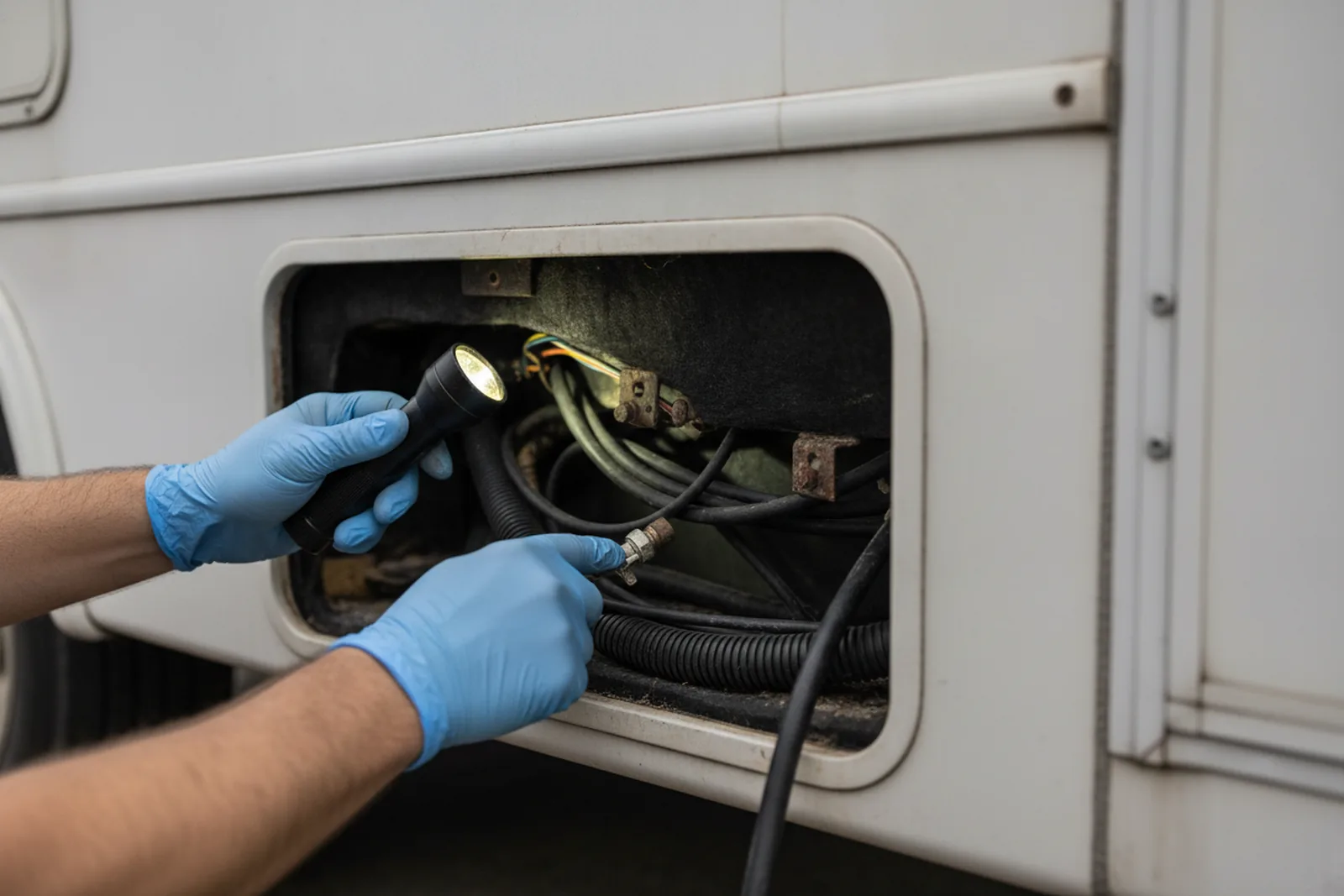
You have three moves after the report.
For private sales, the report is your best tool.
Some findings are negotiation points, not deal breakers. Other things are walk-away items: active delamination, a frame crack, a propane leak at the tank, fried brakes. No report will ever say ‘buy or don’t buy,’ but the Safety section is your guide.
Here’s the order of events:
- Read the whole report the day it arrives.
- Call the inspector with questions. My inspector talked to me for 20 minutes.
- Decide what you can live with and what the seller must fix.
- Put repair requests in writing to the seller.
- Get the repairs done and re-inspected, or get receipts.
If your offer was contingent, you can walk at any point before you sign the acceptance. Do not wire money before you read the report. Do not sign delivery acceptance with open items. Walking away is free; paying for the inspection is not, so let’s talk numbers.
What a pre purchase RV inspection costs
Prices vary by rig type, length, age, and travel.
Travel fees add up. Many inspectors include 25 to 50 miles free, then charge $0.50 to $2.00 per mile or a flat zone fee. Ask on the phone. A friend paid $85 extra because the rig was 90 miles from the inspector.
Some inspectors add $100 per five years of rig age.
What you pay for is the trained eye. The inspector’s liability insurance usualy covers mistakes, but check the policy. The NRVIA code says the inspector can’t take a repair job on a rig they inspected for at least one year. That means no conflict of interest.
Here’s a quick table of what to expect:
| Step | Who does it | Timing |
|---|---|---|
| Price agreement | Buyer and seller | Before inspection |
| Inspection booking | Buyer calls inspector | As soon as offer is accepted |
| On-site inspection | Certified inspector | 2 to 8+ hours, day of |
| Report delivery | Inspector | 24 to 48 hours after |
| Negotiation or walk | Buyer with report | Within contingency window |
Knowing the cost is half of it. Finding someone worth paying is the other half.
How to find a certified inspector and what to ask
Start with the NRVIA inspector locator, which now goes thru their RV service marketplace.
Do not use an inspector the seller suggests. Do not let the seller pick or pay. One dealer tried to hand me a card for ‘his guy.’ No.
Ask these questions before you book:
- What systems do you inspect? Get the written scope.
- How long will you be on site?
- How quickly do I get the report?
- Do you charge travel or age fees?
- Can I be there during the inspection?
- Do you have liability insurance?
My inspector welcomed me on site for the last hour. He walked me through the report on his tablet, showing me the hot-skin test and the fridge burner. That hour was worth the whole fee.
One more tip: compare the inspector’s scope to the NRVIA Standards of Practice. If an inspector says the roof doesn’t need a look becuase it’s new, find another inspector. Because the inspection only works if the rig is ready for it.
The one thing I’d do differently
I’d have written the setup list into my purchase agreement. My inspector asked for shore power, propane and de-winterized plumbing, but the dealer brushed it off. I lost two hours and had to reschedule the fridge test.
So here’s the move: before you sign anything, type up a one-page list. Shore power connected. Propane tank full. Water system de-winterized and filled. Battery charged. All keys and remotes availible. Attach it to the offer. If the seller won’t agree to that, ask yourself what else they’re hiding.
Next step: pull up certified or mobile RV inspectors near the rig and call two of them. Ask what their report includes and what it costs for that exact rig. Then book one.
Before you book an inspector
FAQ
How much does a pre purchase RV inspection cost?
Most buyers pay roughly $350 to $1,500 or more depending on rig type, size, and location. A small travel trailer may run $350 to $450, while a Class A diesel pusher can be $650 to $1,500 or more. Travel fees, rig age, and add-ons like fluid analysis raise the price. Ask the inspector for a firm quote before booking.
How long does an RV inspection take?
On-site time ranges from about 2 to 4 hours for a small towable, 6 to 8 hours for a mid-size motorhome, and 8 to 10 or more hours for a large diesel pusher. The written report usually arrives within 24 to 48 hours after the inspection.
What does an RV inspector check?
A certified inspector follows the NRVIA Standards of Practice, wich cover roof, sidewalls, windows, doors, awnings, slide-outs, electrical systems, plumbing, propane, appliances, and interior. For motorhomes they also inspect the engine, cockpit, and exhaust. Towables get a check of the hitch, brakes, bearings, and suspension.
Will an inspection find water damage?
Inspectors look for visual signs like stains, soft spots, and delamination. They use moisture meters, both pinless and pin type, to scan walls and floors. High readings suggest further investigation, but an inspector won't tear open walls. No test can guarantee hidden water damage isn't there.
Should I be present during the inspection?
It's a good idea, especially for the last hour or so. You can see issues firsthand and ask questions. Some inspectors don't want you there the whole time because it slows them down, but most will let you observe the final walkthrough.
What if the dealer refuses an outside inspection?
Walk away or negotiate. If the dealer won't allow an independent inspector, they may be hiding something. You could agree to a short life-safety inspection on the lot, or schedule an inspection right after purchase and have the dealer agree in writing to fix or refund for any major issues.
Do I really need an inspection on a brand-new RV?
Yes. New RVs often leave the factory with defects that need fixing under warranty. An independent inspector works for you, not the dealer. They can find problems before you sign and take delivery. The cost is small compared to a missed roof leak or failing air conditioner.
Find RV inspectors near you
Compare independent RV inspectors in your city, then ask a few for a price before you buy.
Browse by stateOr jump to: Pre-purchase RV inspection · Bushnell, FL · Yuma, AZ · Foley, AL